
FMN Editorial Staff
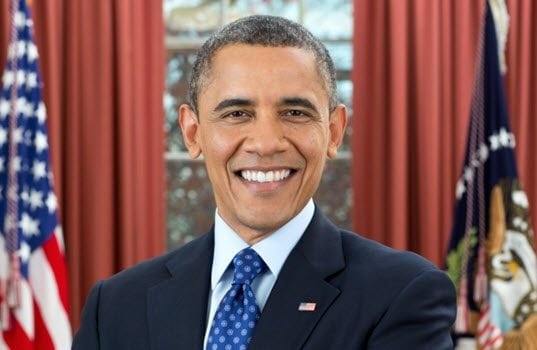
President Obama is pressing ahead with his commitment stated in the recent State Of The Union address to advance his climate change agenda, as part of what he promises to be a year of executive action bypassing the legislative branch in areas where the there is insufficient support to achieve his policy goals. Climate change is practically a dead issue legislatively with little interest among the American people or Congress for sweeping action; however, through executive orders and federal agency support the President retains options to dictate policy on this front. Obama noted in his State of the Union address that one climate change related goal would be to improve the mileage standards — reducing fuel consumption and emissions — for commercial trucks. Today he announced the specifics of that effort.
He has directed the Environmental Protection Agency and the Department of Transportation to set enhanced fuel efficiency standards for medium- and heavy-duty vehicles by March 2016. This represents the second-round of fuel efficiency standards for such commercial vehicles and it will build on his first round of standards finalized for model years 2014 through 2018.
The President also made it clear that the federal government will play a strong role in the process, versus a private sector/free market approach. Obama noted that the government would be working with partners among major fleet operators, manufacturers, labor, states, NGOs and other favored stakeholders.
At the fleet level, Obama highlighted his National Clean Fleets Partnership that incentivizes the largest fleet operators to reduce diesel and gasoline use in their fleets by incorporating alternative fuels, electric vehicles and fuel saving measures. As stated in the announcement: “…the President has directed his Department of Energy, working with EPA’s complementary SmartWay Transport Partnership, to provide each company that wants to partner with specialized resources, technical expertise and support in developing a comprehensive strategy to reduce fuel use and achieve greater efficiency and cost savings.”
Where the vehicles are concerned, the federal government will be working with manufacturers to develop, evaluate and integrate the “advanced technologies,” that may or may not be currently in production, that will be appropriate for meeting the enhanced fuel standards. In addition, on the environmental front the California Air Resources Board was mentioned specifically as a partner, with the goal of “ensuring that the next phase of standards allow manufacturers to continue to build a single national fleet.” It might be assumed that the single national fleet would generally be modeled along lines acceptable to CARB.
For the fuels, Obama announced he was establishing an Energy Security Trust Fund for the research and development of advanced vehicle technologies. As part of that he is urging the repeal of the $4 billion in subsidies provided to the oil and gas industry and instead shift those resources to the existing support provided to alternative fuels. This $2 billion trust fund will would focus on electricity, homegrown biofuels, hydrogen and domestically produced natural gas. Another $200 million will be spent incentivizing the development of an alternative fuels infrastructure which should create opportunities for marketers and fleet operators that get with the program. Also, Obama will be proposing to extend the cellulosic biofuel producer tax credit that expired on December 31, 2013.
While the president’s actions are direct, they are not immune to future legal and legislative challenges.
Reactions to these developments will be noted in our new sections as they arrive from the various parties that are going to be impacted. Here is a link to the announcement.