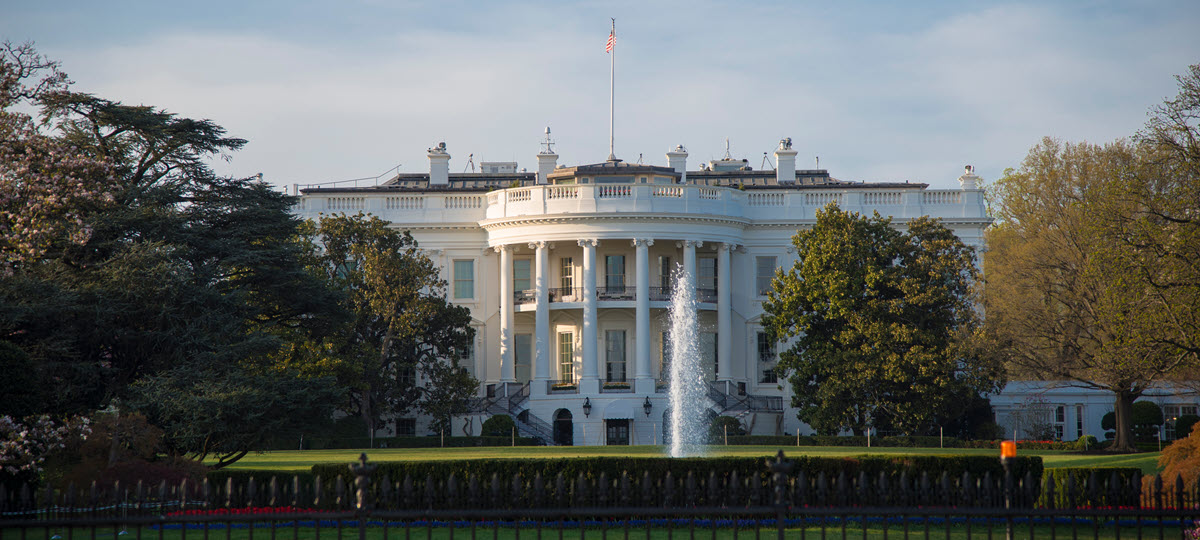

Here’s what might be in the works for energy policy under the Trump administration.
By Keith Reid
[Editor’s note: The following article was developed in the period after President Trump’s election victory but before his inauguration. The overall predictions noted in the article have so far been on point, though the process for turning policy objectives into policy realities is in the earliest stages. Further the challenges noted in the article that the new administration will face to achieve its goals remain. As an addendum, the administration’s statement on it’s energy policy and the executive orders issued are included at the end.]
While it is difficult for a president to directly influence the price of oil or refined products in a traditional market sense (with exceptions such as manipulating the Strategic Petroleum Reserve), administrative policy can have notable indirect impacts.
The executive branch establishes the focus for a range of federal agencies (EPA, DOT, Department of the Interior, etc.) that set regulations and standards that can impact domestic energy production—which ultimately impacts energy supply. Examples include policies around energy production on federal lands and CAFE vehicle mileage standards.
Similarly, energy policy and government investment can send strong market signals that impact private investment decisions toward favored solutions and away from disfavored ones.
The Biden and Trump administrations could not be further apart on their outlook for domestic energy.
From its first day in office, the Biden administration aggressively pushed carbon reduction initiatives tied to environmental policy and social justice. There was a central push to quickly implement renewable energy, with electrification being preferred in most aspects, including transportation. Biden was able to get much of his agenda passed, with the crowning achievement being the Inflation Reduction Act.
During his first term in office, Donald Trump pursued what could best be described as an “all of the above” energy policy, with the “above” having with far less concern for carbon reduction. While this article was written before the inauguration, his 2024 campaign messaging clearly indicates a return to those policies, with the catch phrase “drill baby drill” being prominent. Trump has also indicated a desire to roll back downstream regulations from the Biden administration that he considers to be onerous, limiting California’s ability to de facto set energy policy and withdrawing from the Paris Accord.
Pushing for certain policy outcomes in Washington is often easier said than done when there is an active opposition—which is the case with energy policy—even with the same party controlling Congress and the executive branch. However, we can look at what the administration is expected to propose and the challenges faced with moving those proposals forward.
Domestic Energy Exploration and Production
Upstream policy impacts the downstream industry as the core cost of a gallon of refined motor fuel is largely driven by the cost of a barrel of oil. The Biden Administration significantly limited access to developing energy on public lands, increased the cost of oil and gas leases and boosted energy-related taxes. Ozone restrictions impacted production in the Permian Basin and a finalized commitment to methane reduction (as part of the Inflation Reduction Act) that similarly impacts domestic oil production.
Will the Trump administration be able to reverse the Biden administration policies and impact fuel prices in a timely manner?
“I think you’re going to see fewer restrictions on drilling for sure, permitting, etc.,” said Dennis Kissler, senior vice president of the trading division at BOK Financial. BOK Financial is a top 25 U.S.-based bank headquartered in Tulsa, Oklahoma. “So, that’s probably more negative to prices longer term if we’re going to reduce restrictions, especially for offshore.”
While an administration can influence investment decisions, current market forces and structural financial considerations provide the more immediate impacts. There are natural headwinds to investment in domestic production (specifically fracking) and production decisions for existing fields.
The early days of fracking saw several boom-and-bust cycles driven by overproduction that generated uncertain returns for investors.
“Just because there is a new administration more open to oil production doesn’t mean lower petroleum prices right away,” said Kissler. “The market may react to that in the short term, and it will probably be positive to energy company stocks because it’s going to provide them the opportunity to pick up production if they want it. Now it comes down to net profit. They want to give cash back to the shareholders and it’s going to be very price corrective as to whether we increase drilling or decrease drilling.”
Kissler noted that profitability starts at around $65 per barrel. Anything above $75 (WTI) significantly increases the drive to produce. Even with efficiency in the production process continuing to increase, so do current costs. As the Permian Basin has moved to the west, some of those areas are seeing increased depletion rates and significantly increased lease costs.
Of course, geopolitics from Ukraine to OPEC+ can have dramatic price impacts and are difficult to predict.
CAFE and Tailpipe Regs
In its campaign materials, the Trump administration promised to cancel the emission regulations for light, medium and heavy-duty vehicles, noting a potential loss of 117,000 auto manufacturing jobs. These stringent regulations focus on tailpipe emissions versus lifecycle emissions (a far more nuanced way to measure carbon emissions with a specific technology) and severely limit options beyond electric vehicles.
Similarly, the Trump administration expressed a commitment to end the Biden EPA’s CAFE fuel economy standards. It claims the standards will cost the auto industry an estimated $200 billion and raise the average cost of vehicles by more than $1,000. The mileage requirements are very stringent and are broadly seen as driving more gallons out of the market than EV penetration.
NACS’ position (and generally the position of its industry association peers) has been that standards should be technology neutral and not simply a mandate for one specific solution such as EVs. The tailpipe regulations have specifically crossed that line, it argues.
“We’re hopeful that there are some policies that will change,” said Doug Kantor, NACS general counsel. “In particular, we think performance standards are one thing but mandating a specific technology ends up with inefficiencies, stranded investments and, frankly, even worse environmental outcomes than letting the market figure those things out.”
A number of lawsuits have been filed against the tailpipe standards. On September 9, 2024, some 56 entities filed an initial brief in a lawsuit against EPA. The entities included NACS, RFA, National Farmers Union, American Farm Bureau Federation, 14 state and national corn grower associations, numerous auto dealers, organizations representing trucking and shipping companies, manufacturing groups, energy trade associations, organized labor groups and other parties.
The brief noted that EPA projects at least 68% of new vehicles will need to be electric to comply with the standards by 2032. This effectively mandates a nationwide transition from internal combustion engine vehicles to electric vehicles, and the Clean Air Act does not clearly authorize EPA to force Americans to buy electric vehicles.
What do automakers think about this? A short, November 12 letter to the Trump administration outlined the following goals from The Alliance for Automotive Innovation. This organization represents all the major automakers, battery producers and semiconductor makers.
- Address unfair EV competition from China. This can include addressing mineral and raw material supply chains relative to lithium batteries and the electric grid. Similarly, an October letter urged Republicans to maintain the ranges of consumer and manufacturer EV subsidies.
- Address aggressive federal and state emissions regulations (specifically citing California and affiliated states) that “… are out of step with current auto market realities and increase costs for consumers.”
- There is a need for regulatory stability, an important consideration given the long development lead times for automakers.
- Implement a federal regulatory framework for autonomous vehicle technology to remain competitive with China.
With control of the executive branch and agency leadership, the Trump administration can work through the EPA to change many of Biden’s standards and regulations. However, the previous Trump administration had issues finding agency, cabinet and department leadership that would actively support his agenda. There tended to be similar headwinds at lower levels of the bureaucracy. Trump has promised to aggressively clean house with the Washington bureaucracy, but the establishment challenge to such an effort from both the Democratic minority and his own party are daunting.
Kantor noted that even with the administrative goal to reverse these regulations, the lawsuits will continue to be supported until the issues are fully resolved one way or the other.
A recent Supreme Court decision could potentially make reversing the regulations easier.
With the Chevron doctrine, in place since 1984, courts were required to conduct a two-part test and defer to an agency interpretation of any ambiguous statute being legally considered. Now, judges have a more neutral playing field when considering their decisions.
“I think the interesting dynamic is that the existing litigation against the tailpipe rules are aided by the Supreme Court overruling the Chevron doctrine, making it easier to challenge these decisions. On the flip side, if and when a new administration reverses some of these rules, the challenge to that will also probably be easier under the new legal standard than it would’ve been.”
Additionally, legislation is far harder to repeal or tweak than regulations. On August 16, 2022, Biden signed into law the Inflation Reduction Act of 2022. Passed largely along partisan lines, the act included spending $783 billion on energy and climate change with a heavy focus on EVs—and much of the money has found its way into Republican districts.
“I think it’ll be difficult to repeal or make significant changes to the policy in that act, but the money is a big question,” Kantor said. “There are rescissions where Congress takes some of that money that hasn’t been spent or is slow to get spent and applies it to other purposes. That could easily happen based on where things stand in the process.”
Pushback on California
With almost 40 million residents, California is the most populous state in America. It is also on the cutting edge and pushes environmental boundaries beyond EPA mandates. The result is that the state’s market power tends to drive environmental policy nationally.
It can do this because in 1967 Congress gave the state the ability to exceed federal standards for cars and other vehicles due to geological factors that gave the Los Angeles basin significant smog problems. This is accomplished through an EPA waiver process.
Currently, a variety of waivers await EPA approval, including mandates for zero-emission cars and trucks and more aggressive standards for locomotives, commercial ships, off-road diesel vehicles and construction equipment. However, the waivers must be specifically focused on California’s unique pollution concerns, cannot be excessive by reasonable standards and must be basically aligned with federal law.
Other states have the option to follow the federal standard or the California standard, but can’t independently come up with their own standards. Currently 11 other states have followed California’s stricter rules.
“EPA has granted a waiver for one set of California rules and there’s a pending request by California to have a waiver for their second, Advanced Clean Cars 2 rule,” said Kantor. “If EPA were to rescind the existing waiver and deny others, then California would just follow the federal standards.”
The tool the Trump administration would use is the Congressional Review Act. This allows Congress to invalidate regulations. There is a moving target as to how far back based on the number of days Congress has been in session that Congress can review and try to invalidate a regulation.
“There will be some set of things that the Biden administration has done or will do that potentially could be repealed by Congress,” Kantor said.
He noted it is not clear exactly when that deadline will fall. For example, if EPA were to grant California a waiver for its Advanced Clean Cars 2 rule now, that will fall in the time window and Congress could try to repeal it under the Congressional Review Act.
 Keith Reid is the editor of Fuels Market News