
The availability of electric vehicle (EV) charging infrastructure, formally referred to as electric vehicle supply equipment (EVSE), is a primary concern with respect to developing an EV and EV charging market in the U.S. Over the last decade, federal, state, and local governments; utilities; and other stakeholders have introduced new policies, programs, and incentives to support and accelerate both the adoption of EVs and the deployment of EVSE.
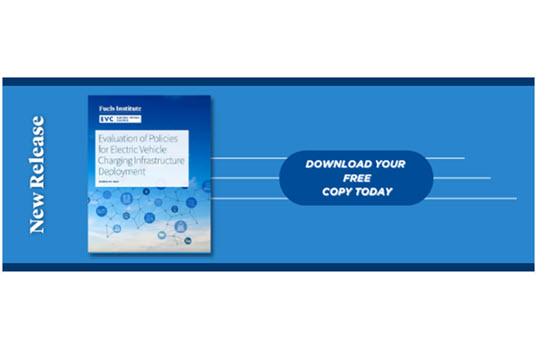
The Fuels Institute has released a new study to better understand what elements of past or existing programs were most supportive of the Electric Vehicle Supply Equipment (EVSE) market development.
Policies for Electric Vehicle Charging Infrastructure Deployment, commissioned by the Fuels Institute’s Electric Vehicle Council, was developed by ICF researchers who reviewed and evaluated the market influence of nearly 500 different policies and incentives, studying their influence on market development from a data-driven perspective as well as from the perspective of key stakeholders.
The report found the following:
Funding and/or regulatory programs were found to have a positive influence on EVSE market development, especially when several programs were implemented within the same market.
Public funding, with rebates and incentives managed at the state level, may be responsible for as much as 26% of the difference in EVSE installations between markets with and without such funding.
Programs with flexibility, clear guidance and simplicity, that set actionable goals, were found to support EVSE market development by helping to align public and private efforts, increase coordination between agencies and jurisdictions, and stimulate investment.
Regulatory programs addressing climate change or air quality and emissions were found in markets with some of the highest levels of EVSE market development.
Policies that allow charger hosts to resell electricity without being considered a public utility result in markets with higher levels of EVSE market development, as do markets with utility make-ready programs, EV-focused utility rates and incentives.
You can download the entire report and other related insights free of charge.