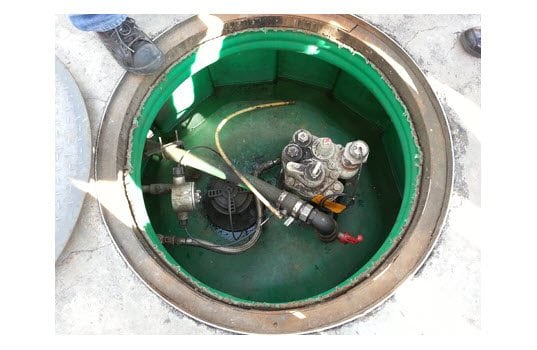

Tank sumps are easier to repair than dispenser sumps just by nature of the size of the access. The challenge in dispenser sumps is the limited access. Unless the dispenser sump is shallow enough that the floor can be reached through the dispenser panel openings, the dispenser must be shut down and removed from the base. The sump riser pipe bracketing is loosened and the pipe risers are pushed to one side or the other to allow a technician to reach in for easier access and repair. Although this may be a challenging effort on the part of the technician, the work is feasible and much less intrusive and costly than excavating and replacement, of course. It’s a significantly faster option as well.
Many contractors are hiring and training personnel specific to this type of maintenance. And “maintenance” is really the definition of this type of work, because there is no structural replacement of the system. All major components remain in place during the maintenance action (tank, sumps, and piping).
If surface water leaks into the tank sumps are a problem, then either the manhole cover or sump lid needs to be made watertight. The replacement of gaskets on covers and lids may be all that is required. There are several retrofit watertight manhole covers and a number of retrofit sump lid product options available in the market. A contractor can generally install these solutions in a single day trip to the site.

Retrofit watertight manhole cover

Retrofit watertight sump lid
For sump entry fitting leaks, which can allow water in and fuel out, the solution is best when the fitting is replaced or repaired without disconnecting the entry pipe for obvious reasons. This means that the repair fitting must be split and permanently joined over the existing pipe to provide a truly fueltight seal in that environment. There are several manufacturers of “split-repair” fittings in the market. Some are bonded back together with a solvent that makes the fitting solid after just 30-40 minutes cure time. This is a significant advantage in fitting repair.
Without getting into specific applications or instruction on the process, the bottom-line here is that fitting leaks can be repaired in dispenser, transition, and tank sumps without disconnecting pipe and from within the sump regardless of the sump design, fitting design, and pipe combination. Even when the pipe has an angled or offset entry through the existing fittings, repair is possible while leaving the pipe “as is”. Fitting repairs are generally same day completed applications.

“Split-repair” fitting, before

“Split-repair” fitting, after