
Guest Blogger, Doug Haugh
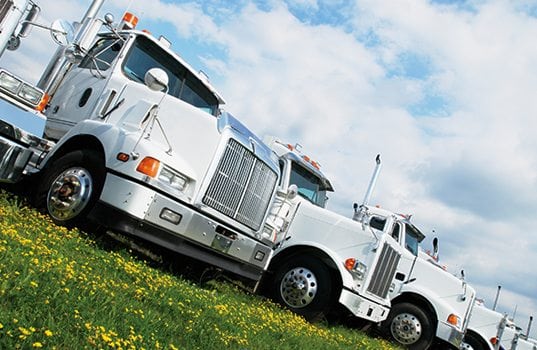
Yesterday (Feb. 18) the White House, or more specifically President Obama, announced new fuel economy standards for heavy duty trucks. The full summary report of the announcement and the White House’s summary position on what this means is located here – White House Fuel Economy Report on Heavy Duty Trucking. Unlike passenger cars that have been subject to CAFE requirements for fuel economy since 1975, heavy duty trucks have not been subject to an efficiency standard, only an emissions standard covering pollutants.
That last word, “pollutants” is the key here, as now that carbon dioxide has been classified by the EPA as a pollutant they are asserting that they can now regulate carbon emissions. That is a much larger topic impacting nearly all of our energy production, but for now let’s just focus on the trucking requirements. The main point of all this is that the heavy duty trucking segment produces a disproportionate amount of emissions despite the overall numbers of vehicles being far less than automobiles. The graphic below from the report shows just 4% of registered vehicles emitting 20% of the GHG’s from transportation.

So, a few obvious questions. What will this do to fuel demand? What will this do to truck prices? What will this do to the operating costs of the fleets running these trucks? Let’s start with fuel demand. In the graph below from the report, the expected reduction in future fuel demand is 10 billion gallons a year in 2050.

Well, using 10 billion gallons less than the current path we are on sounds like a good idea. However, on to those other questions: truck costs and operating costs. The administration claims that these fuel savings will result in fleets saving substantial operating costs.

That seems like a great proposition, but what is left out of this story, and what remains to be seen, is how much these “SuperTrucks” will cost. If I’m saving $20,000 a year per truck, but paying $100,000 more for the truck, then it is not going to be very much fun for truckers or their customers.
Most fleets and truck operators today require a one- to two-year payback, on their incremental investments in new truck technology. This is the hurdle that natural gas powered trucks are now clearing, which is why we are seeing many more of them on the road. So before we all hail the arrival of the SuperTruck that is going to save us 10 billion gallons a year, I think we have to know more about the price to get there.
 Douglas S. Haugh is currently President of Mansfield, a $9 billion industry innovator recently ranked by Information Week as the No. 1 technology innovator in Energy & Utilities and the only nationwide provider of fuel supply, biofuels, propane and diesel exhaust fluid. Haugh is a frequent speaker on energy, supply chain technology and entrepreneurship. He can often be found leading general sessions or seminars at many national conferences and conventions. He also blogs on energy issues at: http://thinkingonenergy.com. The opinions expressed there (and here) are his, and not those of Mansfield.