
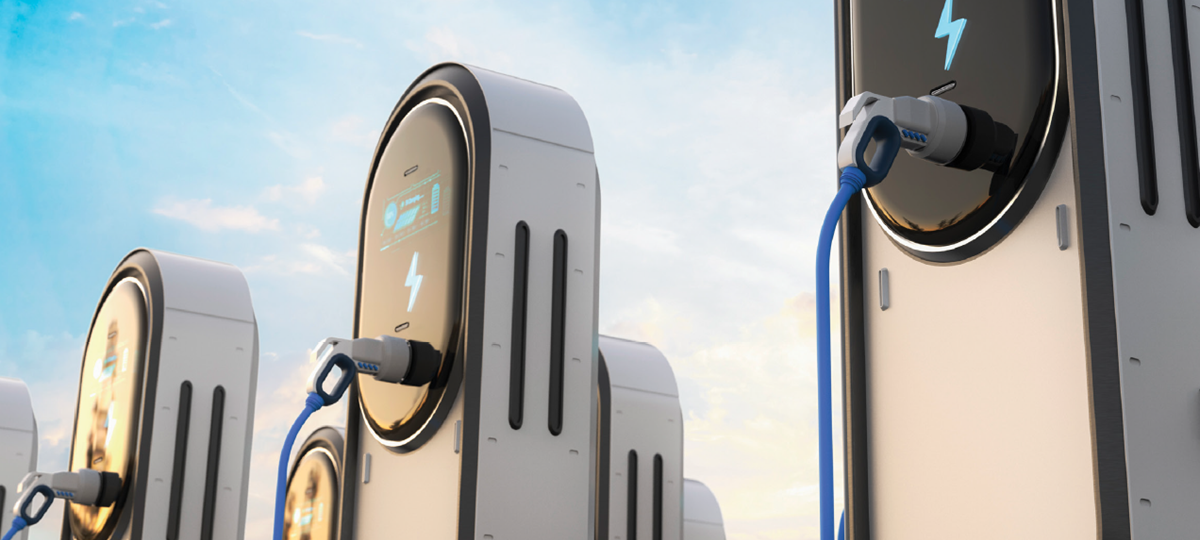

A new report from TEI provides EV charger operators with some guidance to best serve their customers.
By Keith Reid
The Transportation Energy Institute recently released the report Electric Vehicle Insights, developed through its Electric Vehicle Council. The motivation for the report was to help address the “chicken and egg” aspects with EV charging adoption among charging service providers such as convenience store operators: Concerns such as range anxiety among potential EV purchasers can be alleviated by a more robust charging network, however, charging service providers want to know how to best serve these customers and obtain a reasonable return on investment for the capital outlays to add charging.
As the report notes, the demographic profile of today’s EV driver in the United States is not representative of the overall driving population, but insights can be gleaned from their behavior, as well as from the behavior of drivers in other regions of the world with more mature EV markets. The systems and programs needed to capture and develop insights need to be in place before the coming inflection point. A better understanding of EV drivers today can inform how the EVSE market can best serve the needs of EV consumers as the market grows and matures. Similarly, the experience of international charging providers of different scales is studied.
“There are a lot of surveys of consumers, but none have ever combined insights from EV drivers with the experience of charger operators. This provides unique insights into how to best serve the EV driver,” said John Eichberger, TEI executive director.
Here is the executive summary of the report, providing some highlights and key takeaways.
Data shows that about half of EV drivers’ households (49%) own at least one other type of vehicle in addition to their EV. A quarter of them (25%) have a liquid fuel vehicle and 21% have a hybrid. This means that a significant number of EV drivers need to find both petroleum-based stations and charging stations for their vehicles. Moreover, 62% of EV drivers report that their driving mileage has not changed since having an EV and 31% say they are driving more.
Desired Customer Amenities
Results also showed that EV drivers have amenities and services preferences, and they discriminate between EV charging stations based on the amenities offered. The top five of their preferred amenities and services are (1) multiple charging spots allocated, (2) open 24/7, (3) chargers located in highly visible areas, (4) bright lighting around the charger units, and (5) visible security cameras. Notably, four of the five in this list concern customer safety.
“One of the key criteria for drivers to select a charger location is safety,” Eichberger said. “Among the top considerations, drivers want stations open 24 hours a day with chargers located in highly visible and brightly lit locations, preferably with security cameras. Unfortunately, these features were not always offered by the charger site operators surveyed for the study, indicating there is a disconnect between what drivers want and what operators are offering.”
Interestingly, only about half to two-thirds of site hosts offer exactly these amenities and services to their customers: chargers in high visibility areas (68%), security cameras (65%), bright lighting (56%), multiple charging spots (46%) and open 24/7 (52%).
Another analysis in the study provides guidance on the set of features and amenities site hosts can offer to maximize their reach to EV drivers. The most effective set of amenities and features—to reach 93.1% of EV drivers–consists of the following:
- Chargers located in highly visible areas
- Multiple EV charging spots
- Prepared food like sandwiches and pizza
- Open 24/7
- Children’s playground on site
To slightly increase the reach—to 94.2%—just one more feature needs to be added to the list in the 93.1% reach set: visible security cameras.
The Optimal Charging Experience
In terms of the charging experience, half of site hosts (51%) say they have experienced less than 10% downtime and another 44% say their EV chargers have less than 20% downtime. These results are validated by the EV driver study results. A third of EV drivers (34%) say they have experienced at least one problem at a charger—not an insignificant number, but at the same time, most (65%) say it is rare. Just 9% of EV drivers say they frequently experience EV charging issues.
EV drivers do not think they have long waits to plug into an EV charger at a host site. Most EV drivers (84%) say they don’t have to wait at all or have a very short wait, while just 15% say they typically wait longer than five minutes at an EV charging location.
Site hosts say they do not have any data on what EV drivers are spending in stores. However, 78% of EV drivers say they get out of their car at public charging stations and 30% say they typically buy a drink or a snack while their vehicle is charging.
Major Industry Players’ Perceptions Versus Smaller Site Hosts’ Perceptions
Major industry players (companies that have a minimum of six EV charger sites) do not think site hosts are in a hurry to own and operate their own EV chargers. However, site hosts in the study are more likely to own their EV chargers than lease currently. Specifically, 69% of site hosts claim that they own their EV chargers, 31% revenue share and 16% lease their space to EV charger operators.
Site hosts are thinking about expanding the number of EV chargers they offer in the future. Of existing site hosts, 85% put in the necessary infrastructure and wiring to increase their EV charging capacity during their initial EV charger installations. Different groups have different perceptions of how long it takes for EV chargers to be delivered and installed. Overall, major industry players believe that lead times to get EV chargers installed are longer than site hosts’ experience. Industry players’ perception is that it takes normally about a year from ordering the EV charger units to installation. Two-thirds of site hosts (66%) say it is normally less than 6 months, and 31% say it takes 6 to 12 months.
Major industry players in Europe believe that permitting and licensing are a significant burden for sites. They say installation can be complex because government, contractor and utility bureaucracies are difficult to align and coordinate. Most U.S. site hosts (58%) say permitting and licensing were easier than expected, with only 12% saying it was more difficult than expected and 30% saying it was about what they expected.
Overall, all U.S. stakeholders think local governments are generally cooperative in assisting EV charging sites in adoption and permitting. Most site hosts (94%) say their local government was at least somewhat cooperative, and 91% say their local government was knowledgeable on permitting. It is a different scenario in Europe, where permitting is believed to be complex and time-consuming.
There are discrepancies among the groups about how they believe EV drivers are paying their charging fees. Major industry players believe most customers are paying via app, not credit card. Site hosts say the majority are paying with credit cards (85%) or digital wallets (79%). Just a third (31%) say EV drivers are using an app. EV driver themselves say they pay by digital wallet, credit card and app about equally (32%, 29% and 25%, respectively).
Major industry players are more likely than smaller site hosts to think utilities are more of a hindrance. Major industry players feel utilities cannot keep up with the pace of demand by site hosts, while 98% of smaller site hosts said their local utility was at least somewhat responsive to their needs and requests.
EV charger maintenance is not seen as a major issue by either major industry players or smaller site hosts. Both groups believe EV charger original equipment manufacturers are quick to respond to issues. All the site hosts included in this study said their EV charger manufacturer was at least somewhat responsive to their maintenance requests. Finally, the study shows that site hosts are at least satisfied with their EV charger revenues. This does not mean their EV charger operations are profitable, but that the site host is generating revenues from their EV charger investments that meet or exceed their expectations. Specifically, 54% said their EV charger revenues exceeded expectations and 44% said revenues met expectations.
What should be the main takeaway for a convenience retailer?
“Installing chargers is not enough to attract EV customers–retailers have to provide amenities that drivers are seeking,” Eichberger said. “EV drivers are likely to spend 20 minutes or more at a charger location—retailers have an opportunity to provide those drivers with a comfortable, safe facility and a compelling store offer that can help generate business at those installed chargers.”
TEI, founded by NACS in 2013, is a nonprofit research-oriented think tank dedicated to evaluating the market issues related to vehicles and the fuels that power them. The report was prepared by Heart+Mind Strategies, a one-stop insights consultancy that provides research-based answers for companies and organizations to achieve their strategic goals. The full report goes into far greater detail and can be downloaded for free at: https://www.transportationenergy.org/
 Keith Reid is the editor and editorial director for Fuels Market News.