
Despite the rapid increase in electric vehicle sales, the market will continue to be dominated by ICE vehicles for decades to come. In the pursuit of reducing carbon emissions from the transportation sector, finding solutions for these vehicles must be a priority.
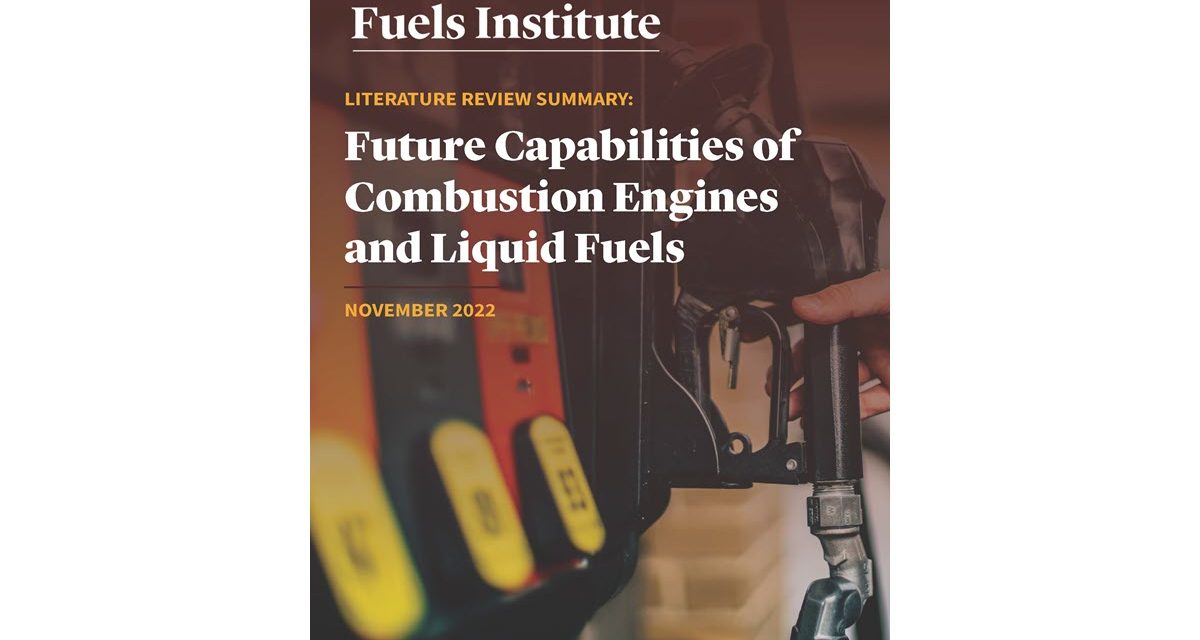
For this reason, the Fuels Institute released a new report today which presents a high-level summary of research and development projects focused on improving the ICE efficiency and emissions and reducing the carbon intensity of liquid fuels.
The report, Future Capabilities of Combustion Engines and Liquid Fuels, looks at the objectives and potential benefits of such initiatives is important to better evaluate the potential emission contributions of the transportation sector. “This summary is just a snapshot of what might be possible,” states John Eichberger, Fuels Institute’s Executive Director. “There remain significant projects that could greatly benefit the path to decarbonizing transportation. Decision makers should seek viable solutions and support further progress in technology and fuel formulations in their effort to achieve a lower carbon future.”
Although some have reported that work on ICE technology has ceased and that no additional improvements can be had, this study found thousands of current citations pertaining to research that could yield significant improvements in the performance and environmental footprint of these vehicles.
Download the report.
The Fuels Institute, founded by NACS in 2013, is a non-profit research-oriented think tank that evaluates market issues related to vehicles and the fuels that power them, incorporating the perspective of diverse stakeholders to develop and publish peer-reviewed, comprehensive, fact-based research projects. The Fuels Institute is a non-biased organization that does not advocate.