
By Joe Petrowski
There are two opposing camps on Ethanol. The first includes those who support ethanol vigorously such as farm state politicians, ethanol producers and the supporters of bio-fuel development or anti-traditional carbon fuels. The opposition includes some coastal politicians, some consumers and some fuel merchants and those concerned with the cost of the renewable fuel mandate on our economy (estimated to be over $10 billion annually) as well as those who worry about the fuel vs. food tradeoff.
There is a sensible solution…
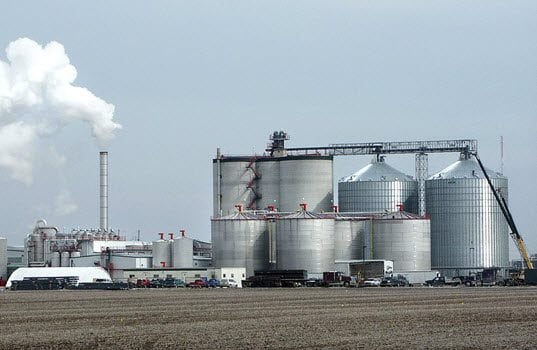
Ending the ethanol mandate with a hard stop would harm the farm economy, devastate manufacturers that have poured over $100 billion of capital into the industry, create significant unemployment and impair a slew of hard assets and the bonds backing them. And, while we are more self-sufficient in petroleum than at any time since 1949, removing 13 billion gallons of ethanol would add 1 million barrels/day to oil demand which is certainly not in our national interest. While that is not a problem today, oil is inherently volatile and foreign oil suppliers are inherently unstable. We should cherish the redundancy and optionality alternate fuels supply.
Unless I am stuck on the side of the road or hungry, I have never been influenced by the food vs. fuel argument. Whether a bushel of corn should be consumed as cereal, meat or burned as ethanol depends on price, alternatives and circumstances. This is what markets are for.
Ethanol today is $1.65 per gallon and wholesale gasoline is $1.95, so blending in ethanol lowers the per-gallon price (not counting the tax break on ethanol and lower BTU content). But ethanol has been as high as $5 per gallon in last 10 years and gasoline has ranged from $1 per gallon to $3 per gallon in the same time period. While most politicians’ time horizon is from the last election to the next one, responsible leaders and policy makers should plan for longer and more divergent outcomes.
The solution is to push for more flex-fuel vehicles and equipment (tanks, pumps and hoses) that can handle higher ethanol blends (up to at least 30%) and let the fuel merchants handle the blending and labeling. End the subsidies and mandates which are made more complex by declining consumption from CAFE standards and demographics. We would also need to modify the oxygenate requirement from EPA; or allow marketers to meet the requirement by any alcohol, ether or additive (excluding MTBE); or set a minimum ethanol content at 10% but leave the maximum open. That would again relieve the treasury of a subsidy, and let market work.
If ethanol is cheaper more will be blended in, and if its premium to gasoline widens or gasoline is at a significant discount then less will be blended in. In fact, the elasticity and competitiveness of the fuel market at all stages along the chain is so sharp, that as long as the fuel is legal the cheapest blend will be produced. The consumer can make the BTU determination or we can post the BTU equivalent. Our fuel distribution and marketing system is sophisticated, innovative and competitive. If squirrels milk were a transportation fuel, effective, legal and less expensive fuel merchants would generate a run on tiny milking stools (though I am sure PETA would object).
If the United States had the same percentage of flex fuel vehicles as Brazil we would currently be consuming 25 billion gallons of ethanol (more than the current mandate), saving $1 billion in treasury expenses and using 1 million barrels less petroleum per day.
Farmers would smile, tax payers would smile, consumers and fuel merchants would smile, producers would smile and squirrels could relax.
 Joe Petrowski has had a long career in international commodity trading, energy and retail management and public policy development. In 2005, he was named President and CEO of Gulf Oil LP and elected to the Gulf Oil LP Board of Directors. In October of 2008 he was named CEO of the now combined Gulf Oil and Cumberland Farms whose annual revenues exceed $11 billion and that now operates in 27 states. In September 2013, Petrowski stepped down as CEO of The Cumberland Gulf Group. He is now managing director of Mercantor Partners, a private equity firm investing in convenience and energy distribution.