
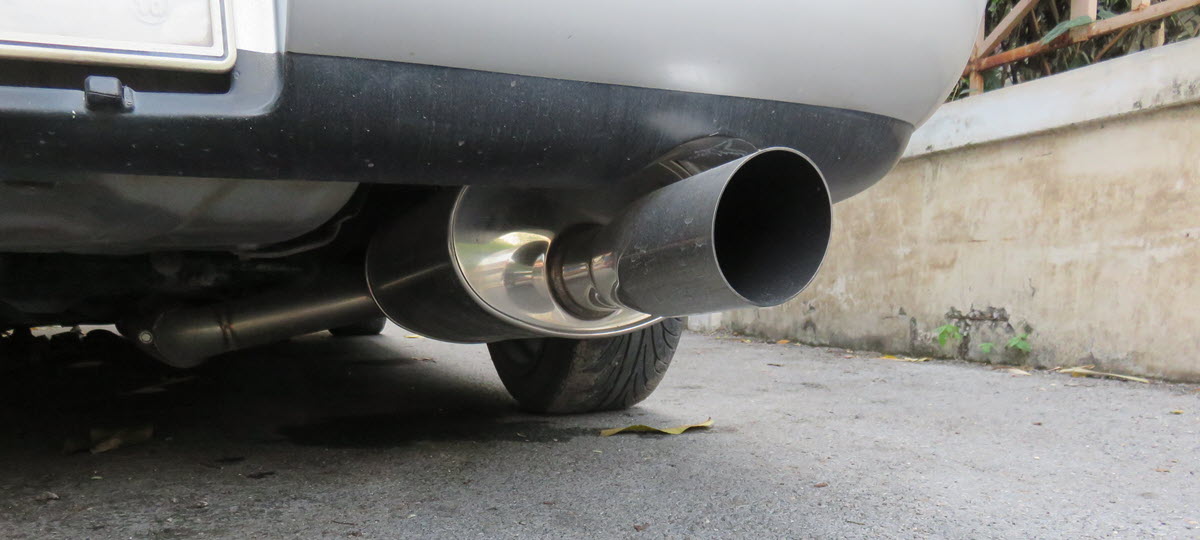

Heavy- and light- duty EPA carbon standards face fierce push back.
By Keith Reid
If reducing carbon is truly the goal, meeting that goal should focus on the required end results and not mandating the specific approach to get to that point. However, the EPA emissions standards, announced in March, for light-, medium- and heavy-duty vehicles set a de facto solution for transportation carbon reductions—electric vehicles.
The final EPA Phase 3 heavy-duty standards apply to delivery trucks, refuse haulers, public utility trucks, transit, shuttle and school buses and tractors (such as day cabs and sleeper cabs on tractor-trailer trucks). The standards vary according to vehicle type and range up to 60% stronger than the previous standards for vocational vehicles. For tractors (semi-trucks), standards vary according to vehicle type and range up to 40% stronger than previously.
The EPA’s Light-Duty Vehicle Greenhouse Gas Regulations and Standards Final Rule covers cars, SUVs, light pickup trucks and medium-duty large pickups and vans for model years 2027-2032. These standards provide a 44% reduction in projected fleet average emissions target levels.
The expectation is that from 2030-2032 manufacturers may choose to produce battery electric vehicles (BEVs) for about 30% percent to 56% of new light-duty vehicle sales and about 20% to 32% percent of new medium-duty vehicle sales.
The EPA announcements claim that both heavy- and light-duty standards are “technology-neutral and performance-based, allowing each manufacturer to choose what set of emissions control technologies is best suited to meet the standards and the needs of their customers.”
Specific solutions noted are advanced internal combustion engine vehicles, hybrid vehicles, plug-in hybrid electric vehicles, battery electric vehicles and hydrogen fuel cell vehicles.
However, in addition to being highly aggressive, the standards are based on tailpipe carbon reductions that do not consider lifecycle carbon inputs.
“The regulations are based on tailpipe emissions; that’s how they’re structured,” said John Eichberger, Transportation Energy Institute director. “I understand why they’re doing it this way, but it ignores all the emissions that happen upstream from power generation, material harvesting and manufacturing. A much more comprehensive way to address carbon and provide the reductions we need is to tackle emissions where they come from. Our studies showed almost three quarters of an EV’s emissions come from electricity generation.”
The tailpipe focus of the regulations has been addressed numerous times during discussions with the EPA and in congressional testimony. For example, in testimony before the U.S. House of Representatives Committee on Oversight and Accountability last year, NACS General Counsel Doug Kantor stated the following:
While we are supporters of the development of EVs and EV chargers, we have concerns with the approach taken by the EPA in its tailpipe rules. By focusing on tailpipe emissions rather than overall lifecycle emissions and choosing EVs as the preferred technology rather than other technologies—including internal combustion engines and potentially additional innovations in engines or liquid fuels—the EPA has reached conclusions that are not as effective as they should be for the economy or for the environment.
We need policies in place that take a clear-eyed look at all emissions related to the transportation sector and that lead to emissions reductions from all vehicle technologies. Only by allowing different technologies to compete on emissions reductions as well as on their appeal to consumers will we get the best environmental and economic outcomes that we can achieve.
The blowback from the final standards has been strong outside of the EV sector.
American Petroleum Institute (API) President and CEO Mike Sommers and American Fuel & Petrochemical Manufacturers (AFPM) President and CEO Chet Thompson issued the following statement:
At a time when millions of Americans are struggling with high costs and inflation, the Biden administration has finalized a regulation that will unequivocally eliminate most new gas cars and traditional hybrids from the U.S. market in less than a decade. As much as the President and EPA claim to have ‘eased’ their approach, nothing could be further from the truth. This regulation will make new gas-powered vehicles unavailable or prohibitively expensive for most Americans. For them, this wildly unpopular policy is going to feel and function like a ban.
Others opposed to the final standards include SIGMA, NATSO, Specialty Equipment Market Association, ATA, National Corn Growers Association, Consumer Energy Alliance, Renewable Fuels Association, American Coalition for Ethanol, Clean Freight and others. Political opposition is bipartisan in nature and includes Sen. Joe Manchin (D-WV), Sen. Mike Crapo (R-ID), Sen. John Tester (D-MT), Rep. John James (R-MI) and Sen. John Fetterman (D-PA).
What About the Grid?
In a release, NATSO and SIGMA noted that to support the full electrification of long-haul vehicles, fuel retailers will need to invest $57 billion to build out a sufficiently dense long-haul charging network, according to a recent study released by Roland Berger. To electrify all medium- and heavy-duty vehicles, fleet and charge point operators will need to invest $620 billion into chargers, site infrastructure and utility service costs. Off-highway refueling locations will need dozens of fast-chargers to service heavy-duty trucks.
Is it even doable?
“I’ve not seen the alarmist, bold, large font language before that I’ve seen in the response to this that I’ve seen in any of the other rules,” said Allen Schaeffer, executive director of the Engine Technology Forum. “This is one where people are saying, ‘Are we seriously going to try and do this?’ Just run the numbers.”
Schaeffer noted that utilities can’t keep up with the challenges they have today with data centers and such, as well as future challenges like the electrification needs of AI. The challenges trickle down to the retail sector.
“A bunch of our larger members made the point that they’re having trouble getting the electricity connections approved just to put in a new regular store,” said Kantor. “There’s not capacity in many of the places they’re trying to go to put a store.”
He went on to add that having several light-duty grade DC fast chargers takes far more power than a typical convenience store requires. Five chargers with two connection points is roughly equivalent to a Walmart Supercenter for power. And truck chargers can create a demand that’s practically like adding an entire town to the grid.
Does the Mandate Work for Consumers and Fleets?
Another challenge is that a one-size-fits-all solution fails to acknowledge the actual needs and wants of the consumer or commercial vehicle operator.
“By laying in policies that are designed for one outcome, are we then suggesting all other potential strategies are unacceptable?” asked Eichberger. “I am most concerned that by putting all eggs in one basket, if that basket doesn’t materialize then what do we have to fall back on?”
A coalition of over 5,000 auto dealerships and the National Automobile Dealers Association both object to the new standards for the same rationale. As NADA said in a statement: “EPA’s proposed rule goes too far, too fast by not acknowledging current real-world consumer demand for EVs. Members of Congress are encouraged to support efforts to counter EPA’s overly aggressive EV mandates and attempts to effectively ban the sale of gas-powered cars.”
On the commercial fleet side, electrification is a solid solution for some sectors, and a poor solution for others.
“[EVs] make perfect sense for an Amazon, U.S. Postal Service, FedEx, UPS—operators with local delivery routes,” Eichberger said. “It is probably the most purpose-built solution you could have. But that’s the key. We need purpose-built solutions.”
However, for long-haul heavy-duty trucks the American Trucking Associations (ATA) cites the following disadvantages:
- A clean diesel truck can spend 15 minutes fueling anywhere in the country and then travel about 1,200 miles before fueling again. In contrast, today’s long-haul battery electric trucks have a range of about 150-330 miles and can take up to 10 hours to charge.
- Battery electric trucks, which run on two approximately 8,000-pound lithium iron batteries, are far heavier than their clean-diesel counterparts. Since trucks are subject to strict federal weight limits, mandating battery-electric will decrease the payload of each truck, putting more trucks on the road and increasing both traffic congestion and tailpipe emissions.
This transition also comes at a cost.
A recent Clean Freight Coalition study found that fully electrifying the nation’s medium- and heavy-duty commercial vehicles will cost motor carriers $620 billion in charging infrastructure alone. That does not include the vehicle cost, which increases by two to three times compared to a diesel truck.
Further, our economy and quality of life hinges on a smooth-running logistics infrastructure. What impact and disruptions will such a radical change in shipping technology bring into U.S. society?
Is the Mandate Counterproductive for the Stated Goals?
One of the biggest shortcomings with the EV mandate beyond practical deployment and operational concerns is the uncertain impact on actual carbon reduction. The current consumer and commercial vehicle fleets will be dominated for decades by both new and legacy vehicles burning liquid fuels—renewable, bio and dominantly petroleum.
“What the folks advocating for the rules should understand—but don’t—is that they’re worse for the environment,” Kantor said. “By picking a technology winner, they will stop research and engineering and innovation on the internal combustion engine, which no matter what the rules say, will be most cars actually on the road for a very long time.”
Consumers in the United States still get a vote (both figuratively at the dealership and literally in the voting booth) on how they want to travel down the road. If the mandate flops as consumers become fully aware of its scope and impact (which is lacking today but will be obvious shortly), alternatives will be required to fill the void moving forward.
History provides a guide on the commercial front. The transition to ultra-low sulfur diesel saw both an aggressive purchase of older technology vehicles ahead of the deadline as well as a strong effort to keep these legacy vehicles in operation longer. And the operational disadvantages between a clean diesel and legacy diesel are far less meaningful than the issues involved in a transition to an EV platform.
“I predict great things for the used truck market,” Schaeffer said. “People are going to hang on to the older equipment for longer, there’s going to be some pre-buy of new equipment. You already see this at some scale now. Fleets are going to go with what works. If we had a lifecycle approach it would offer fleets more choices. It would give liquid renewable fuels a bigger chance. And we might find ourselves looking at something 10 years from now that would reinforce the notion that the internal combustion engine is not the enemy here.”
Next Steps
With the standards finalized, what are the next steps? Kantor noted that there is a multipronged legislative and legal approach to combating the standards. Litigation has been filed by several states challenging the rules.
“The major legal angle’s going to be the statutory authority question,” Kantor said. “That sort of major questions doctrine has been a key piece of overturning other EPA rules, particularly their power plant rules. There’s very clear directive in the Energy Policy and Conservation Act that tells the Department of Transportation you must look at internal combustion engines.”
He noted that in the past the two agencies always did their rules together on this, and here they separated them specifically to try to evade that part of the law.
“A big part of the argument will be that doesn’t work,” Kantor said. “There’s a very good policy-based reason for why the law said make these engines as efficient as possible as a performance matter. Declaring them at some point unlawful was not what they had in mind.”
Is it possible for there to be a stay while the court considers the lawsuit? Kantor noted that is usually the initial skirmish and that there is lead time built into these things. On the other hand, automakers in particular make planning decisions five years out.
“Federal courts can take as much or as little time as they decide, but a decent rule of thumb is that often the initial trial court wave of litigation takes about a year to get a decision, and then an appeal might take about that same amount of time. So that gives you a sense of the dimensions there.”
Federal agencies are largely directed by the current administration. It is no secret that the Biden administration is heavily focused on aggressive carbon reduction and a focus on EVs as the primary solution for the transportation sector. Could a less enthusiastic administration turn things around should Biden lose the election later in the year?
“That is possible. It is difficult and takes a long time,” Kantor said. “It would require focused work for quite a while for a new administration to undo things, short of a court telling them to do, it in which case then it gets easier.”
 Keith Reid is the editor and editorial director for Fuels Market News