
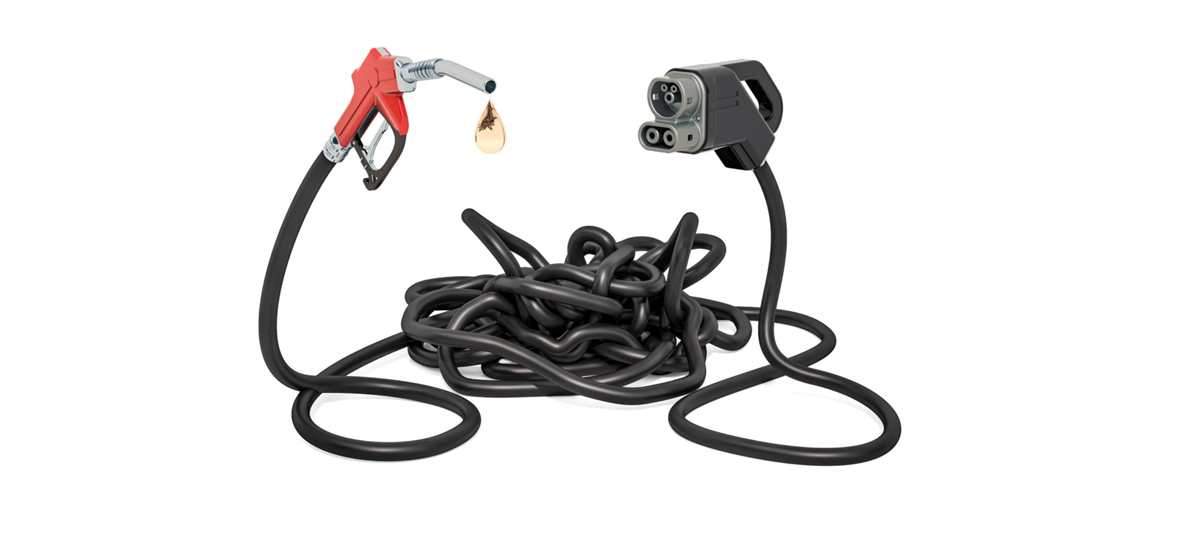

The push for decarbonization is leaving some communities behind.
By Keith Reid
People complain when the price of a gallon of gasoline spikes and filling the tank results in a shocking total. And in states such as California, that amount can take your breath away. However, our current energy infrastructure overall is mature, stable and objectively inexpensive.
Moving to net-zero carbon is a disruptive process, one that invariably brings with it higher energy costs, at least in the short term. Renewables for electricity generation, electric vehicles (EVs) and low-carbon renewable liquid fuels are markets largely in their infancy. It’s going to take time before they become mainstream, and costs decrease.
Current energy prices are hard enough on the most disadvantaged communities, but prices during a transitional period for low-carbon solutions may exceed current energy costs, leading to gaps in service and availability. So, what are the dynamics of the issue, and what can be done?
Keeping to its charter, the Transportation Energy Institute (TEI) recently developed a white paper focused on the issue of equity. We’ll highlight some of the findings here, as well as cover some additional areas.
“Lower emissions strategies and policies need to consider all stakeholders and ensure everyone can participate in the energy transition,” said John Eichberger, TEI director. “The bottom line is that not every solution being considered is appropriate or applicable to all communities. Lower income and remote, rural communities may not be able to support a transition to EVs, but they should not be left behind due to this fact—they need to be given the opportunity to improve their transportation economics and emissions just like more affluent and urban communities. Policies that do not reflect these differences between communities are short-sighted and could result in trapping communities in the past.”
Transportation equity, which has its roots in the environmental justice (EJ) movement, is not a new concept, and in fact, has bipartisan roots. EJ developed in the early 1980s over PCB contamination in largely Black communities. President George H. W. Bush established an environmental equity working group in 1992. Further efforts were undertaken during the Clinton administration, and such efforts are a cornerstone of the Biden administration.
As the white paper notes, according to the U.S. Department of Transportation (DOT), equity in transportation: “[S]eeks fairness in mobility and accessibility to meet the needs of all community members. A central goal of transportation is to facilitate social and economic opportunities by providing equitable levels of access to affordable and reliable transportation options based on the needs of the populations being served, particularly populations that are traditionally underserved.”
While the current focus on transportation is centered on cost and availability, health concerns such as air quality issues remain important.
What Is a Disadvantaged Community?
DOT has a list of factors that go into categorizing a disadvantaged community (DAC), but it can be generally summarized as a population with high poverty, low wealth, lack of local jobs, low home ownership, low educational attainment and high inequality. There are a variety of tools that have been developed to help identify these communities throughout the United States.
Among initiatives President Biden put into effect through executive order and legislation is Justice 40, which, as the white paper notes, directs significant federal investments to communities with a history of disinvestment or discrimination that bear a disproportionate share of environmental and climate-change-related burdens.
Convenience stores and truck stops provide the base of the transportation fueling infrastructure. Are DACs typically served by large c-store retailers or by mom-and-pop type operations? How does that affect charger support?
“Urban areas may have branded and unbranded c-stores serving these communities,” said TEI Vice President Jeff Hove. “These businesses generally have a very small footprint, which impedes charger deployment. Rural c-stores are often single-owner stores, with some notable exceptions, that do not have a high level of capital for investing in a new fueling option.”
EVs and Equity
The white paper focuses heavily on the issues related to EVs in the transportation equity discussion. The reason is simple, as governments throughout the world have looked to EVs as the zero-carbon solution. And various states in America have regarded EVs as not only a primary solution but, in many cases, the only transportation solution to carbon reduction.
The white paper, citing the National Resources Defense Council, notes: “Currently, most of the nation’s public chargers remain clustered in areas where wealthy, predominantly white, early EV adopters live. That’s not altogether surprising, given charging station developers went where there was demand. But this has also created areas with little to no public charging access that often fall along racial and socioeconomic lines.”
EV technology has advanced considerably. These vehicles represent a viable and often mainstream transportation option for large sections of the motoring public, regardless of carbon concerns. However, there are challenges that remain—primarily related to the availability of chargers and the cost of EVs that can be particularly significant in disadvantaged communities.
“With regard to infrastructure, large [retailers] have economies of scale to invest in new tech, whereas many mom-and-pops do not,” Eichberger said. “This situation is exacerbated by the EV transition. Stores in heavily urban markets often have very small formats, typically traditional gas stations with no room for anything else. Rural stores tend to have more space, but they also don’t have the throughput required to sustain an EV investment, and rural drivers currently are not your typical EV driver.”
What about the grid? This is an area of concern in the broader discussion of EV expansion (and more recently the expansion of AI development), so how will that play out in these DACs?
“The health of a grid is as much a product of the utility servicing the community as it is the nature of the community,” Eichberger said. “A rural co-op could be very well-funded and operate a very modern system, whereas a public power agency in a deeply urban market may be functioning on an antiquated system without the resources to invest in modernization. Markets, and the servicing utilities, need to be assessed independently and not simply categorized based upon certain criteria.”
The Biden administration has been making efforts to expand charger infrastructure through such programs as the Infrastructure and Investment Jobs Act’s NEVI program, which will direct $5 billion over the next five years to help build 500,000 EV chargers across the country. However, much of this focus is on major transportation arteries. As the white paper notes, the complementary Charging and Fueling Infrastructure Discretionary Grant Program set aside an additional $2.5 billion for EV charging, hydrogen, propane and natural gas fueling infrastructure with a focus on rural and underserved communities that might otherwise be overlooked.
There is more nuance at work than just randomly adding chargers, and the convenience store industry can be a leader in these areas.
“Urban area EV charging development must include a level of community improvement to create safe areas where EV owners feel comfortable charging for 20-plus minutes,” Hove said. “Public safety is a growing concern, and if done correctly, the c-store can greatly improve the community environment. What’s good for the community is good for the business. Likewise, urban and remote disadvantaged communities have their own special set of wants and needs that the c-store operator can meet, as long as the business proposition/model can be built around the plan and yield acceptable revenue.”
Then there is the cost of the vehicle. Prices are coming down, but the price difference between a new EV and a new ICE vehicle can be as great as $16,000. Similarly, there are issues with the availability of EVs in the used vehicle market and some concerns over the impact of battery life with aging vehicles.
“The used EV market is growing, and I get a sense that resale value, for an EV, is generally less than that of an ICE,” Hove said. “This is likely due to fears of EVs no longer being under warranty and [because] the prospects of potential battery replacement create a consumer fear. However, I have seen no data that supports a timeline for battery replacement. EVs are relatively new to the market [under 15 years], and there are so many factors that can affect battery life that it is difficult to accurately predict when a battery might need to be replaced.”
Low-Carbon Liquid Fuels
Electrification is not the only technology available to get carbon out of transportation. Despite less focus, e-fuels and high renewable content fuels present an alternative that allows the use of the existing fueling infrastructure.
However, these solutions are in the early stages of development, resulting in high prices compared with current fossil fuels (without various price supports in place in regions such as the West Coast and the Northeast). Renewable diesel can cost as much as $4 per gallon more than petroleum diesel, without low carbon price supports. E-fuels are at least three to four times as expensive as gasoline.
However, prices are dropping steadily, and supplies—especially with renewable diesel—are expanding. And despite what seems to be a frantic push for extreme, short-term carbon reductions, conventional petroleum fuels and combustion will be in the market for decades to come. There are opportunities with reasonably priced bio and renewable blends that let internal combustion vehicles emit far less carbon during their time on the road. And ultimately, zero-carbon initiatives are just starting to affect consumers in tangible ways. The outcome of these natural markets and political forces has yet to play out.
Further, residential electricity is currently “cheap,” at about half the price (compared with gasoline) to keep a car on the road for a month. Public fast charging, however, with issues such as demand charges, can offset this price advantage at the retail site. It is also worth considering that the impact of requiring that all electricity be generated by renewables has yet to play out. Renewable leader California currently has electricity rates that are roughly double the national average. Supporters say that these costs are rapidly dropping and that the long-term savings will be worth the short-term pain.
Alternatively, conventional ethanol and bio- and renewable-blended conventional fuels can provide significant carbon reductions today throughout the vehicle fleet, both in DACs and more broadly—and at far more competitive prices. The DACs in states such as California may not have this opportunity given current policies, but those in other regions likely will.
“If the goal is to successfully reduce carbon and air pollutant emissions while serving the needs of all communities, we need policies that support innovation and promote realistic, affordable solutions,” Eichberger said. “For decades, scientists and engineers have found solutions to our most daunting challenges—we need policies that enable them to continue doing so, whether those solutions are powered by electricity, liquid or gaseous fuels. We can and should strive to achieve our environmental objectives in a way that preserves access to affordable and reliable transportation energy for consumers in all communities.”
 Keith Reid is the editor of Fuels Market News.
Addressing Transportation Equity in the Age of EVs
By Victoria Flowers
Putting grid and EV range limitations aside for a moment, there are two additional difficult EV realities that leaders and transportation energy providers need to address: Not every consumer in the United States will be able to afford an EV, and not every c-store operator will be able to afford to add EV charging to their facility.
If left unchecked, these two factors will not only compromise transportation equity in low-income areas, rural communities and Indian Country, they will also slow decarbonization.
Fortunately, a proven solution already exists that will help bridge transportation and decarbonization needs. Here’s what every c-store operator needs to know about the connection between transportation equity and the future supply of transportation energy.
Out-of-Reach Costs
EVs cannot be expected to serve all light-duty transportation needs across the U.S. socioeconomic spectrum. Why? For starters, EVs are expensive.
Although a lot of factors influence vehicle pricing (supply, demand and inflation, to name a few), EV prices were about $16,000 higher than prices for internal combustion engine vehicles (ICEVs) in 2022. The average cost for a new ICEV was $46,000, while an EV cost about $61,000.
While the market for used EVs is beginning to mature and used EV prices have dropped, they are still steep—the average price being almost $28,000. For perspective, the federal poverty level was set at $30,000 for a family of four in 2023, and 11.5% of people were living in poverty in the U.S. in 2022.
On the business side of things, the costs to add EV charging will be too much for some operations to absorb. The business case for adding EV charging simply will not be justifiable in all cases. Beyond the charger investments, which are substantial on their own, soft costs associated with implementing the infrastructure can quickly make an EV project financially unfeasible.
Flawed Decarbonization Approach
Beyond the financial barriers, it is worth noting there are substantive flaws in a transportation decarbonization plan that relies on EVs.
First of all, the turnover of the vehicle fleet continues to slow. The average lifespan of a vehicle is on the rise due to improvements in engineering quality. Light-duty vehicles are typically on the road for 15 to 20 years, with some of them lasting upward of 25 to 30 years. Think about that—vehicles are lasting as long as USTs!
The current goal is for EVs to comprise 50% of all new vehicle sales by 2030. While that goal is well-intentioned, EV sales are highly unlikely to hit the target. An S&P Mobility Report states that as of Oct. 31, 2022, EVs accounted for only 0.7% of the 281 million vehicles in operation. Even the U.S. Energy Information Administration has projected that, under a scenario where buyers may be motivated to purchase EVs in response to high gasoline prices, EVs will account for less than a third of car and truck sales through 2050.
And let’s face facts: Americans still like their ICEVs. Although sales of EVs are increasing, the top three selling vehicles in the U.S. in the first three quarters of 2023 were, in fact, all full-size ICE pick-up trucks.
Liquid Fuels to the Rescue
As the vehicle fleet stands now, ICEVs powered by cleaner-burning liquid fuels are having a greater impact on greenhouse gases than EVs.
A real-world example of this is demonstrated through California’s Low Carbon Fuel Standard, which quantifies greenhouse gas reductions in vehicles powered by alternative energy sources. This includes both zero-emission vehicles and vehicles powered by biofuels. In the third quarter of 2023, the program’s cumulative greenhouse gas reductions broke down like this:
- Biofuels: 83%
- Zero-emission vehicles: 16%
Criteria pollutants—air pollutants for which acceptable levels of exposure can be determined—tell a compelling story because there are parallels between the success of criteria pollutant reduction in ICEVs and reduction in greenhouse gas emissions in those same vehicles. Since 2000, the NOx emission rate from gasoline cars has been reduced by 92%, and by 2030 this rate is projected to be 98% lower than the 2000 baseline.
Conclusion
To ensure both equitable mobility and meaningful decarbonization, the U.S. transportation energy portfolio must include liquid fuels for the foreseeable future. As such, fuel retailers need to continue preparing their operations to store and supply cleaner burning fuels.
However, it would be foolish to ignore EVs altogether. Taking care to phase in EV infrastructure when opportunities arise—such as stubbing in charging ports when breaking concrete for underground fueling system upgrades—can help spread EV costs out over time. And if EVs do become ubiquitous regardless of socioeconomic factors, forward-thinking transportation energy retailers who prepared ahead of time will be in the best position to serve the energy needs of their community.
 Victoria Flowers is a Tribal UST and Environmental Compliance Coordinator for a Tribal Nation and a consultant supporting tribal environmental programs. She has over 30 years of experience and leadership and is recognized nationally among her peers as an expert in tribal environmental program development and management, CERCLA 128(a) Brownfield Programs and underground storage tank compliance in Indian Country. Contact her at [email protected] or (920) 366-6720.