
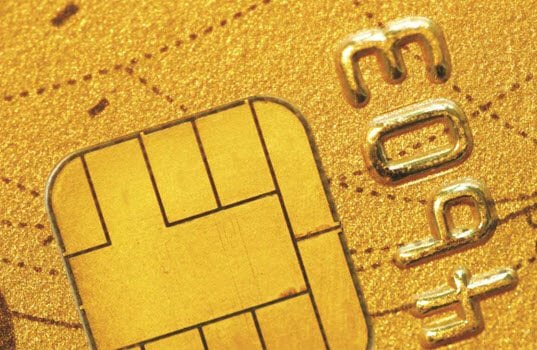

As far as borrowing goes, the times have not been better, relatively speaking.
“There hasn’t been as much money on the street since 2007, and it’s cheap money,” said Len Baccaro, senior vice president sales at Ascentium Capital. Ascentium delivers finance solutions to the industry through a unique finance platform that helps companies acquire nearly any new or used business asset: industrial equipment, franchise assets, office equipment, software, specialty vehicles, technology and more. “The prime lending rate has been at 3¼ forever and the lending market is wide open,” he continued. “It’s not been nearly as hard to get financing since 2012 or 2013 as it was when the recession first hit. As long as you are not brand-new in business or brand-new to the industry—you’ve been round a year or longer—you should have plenty of access to capital to take care of this using third-party money if you do not want to take care of it using cash.”
Upsides for the Expenditures
The capital outlays are going to be significant, but they do bring with them some upsides in return.
As Cerminaro explained, EMV should help to reduce payment card fraud across the industry. The retail petroleum industry was exposed to $250 million of payment card fraud during 2014, while the entire retail industry experienced about $8.6 billion in payment card fraud.
“These figures are expected to rise significantly in the future, particularly given the rise in NFC and mobile payments,” Cerminaro said. “Over 80% of consumer payments in the retail petroleum industry are made via some form of payment cards, as a result, making payment cards secure has to be job one within our industry.”
Cerminaro pointed out that petroleum retailers who upgrade to new EMV compliant POS systems will benefit from better PCI compliance; fewer charge backs from fraud related transactions; improved payment security; building a foundation for emerging NFC payment technologies, such as Apple Pay and Android Pay; and improved image and increased card holder confidence at their store.
“If you are going to be forced to do it, this is almost a perfect opportunity to make these upgrades,” Baccaro said. “There’s been a delay in making such investments with the high gas prices and the uncertain economy and lending issues. And now, with gasoline being cheap and volumes being up, it is not a bad time to spend because there’s extra money available. The longer you wait, the worse the lead times are going to become, and the pricing is likely to increase as well. The financing future is always uncertain, so you might as well jump in now while the lending environment is good.”
And, in general, the equipment upgrades can bring with them new marketing, loyalty and merchandising opportunities. Dispensers, for example, can offer better warranties and interactive marketing and media capabilities.
“If you are going to be forced to do it, this is almost a perfect opportunity to make these upgrades,” Baccaro said. “There’s been a delay in making such investments with the high gas prices and the uncertain economy and lending issues. And now, with gasoline being cheap and volumes being up, it is not a bad time to spend because there’s extra money available. The longer you wait, the worse the lead times are going to become, and the pricing is likely to increase as well. The financing future is always uncertain, so you might as well jump in now while the lending environment is good.”
Early adoption also affords those companies some potential marketing advantages. As EMV becomes more the norm, and consumers become familiar with the technology and can easily identify EMV compliant sites vs. those still using magstripe technology, it is not unlikely that early adopters will market the enhanced data security aspects versus their competitors.
Ongoing Concerns
According to Anderson, beyond the added time and expense to migrate to EMV for the retailer, transitioning to EMV will be an adjustment for customers to learn how to insert their cards into the POS rather than swipe it.
“There needs to be extra attention helping the customer become used to the change,” Anderson said. “The fact is there will be customers walking away and leaving their cards in the POS—especially at the pump and then driving away. Clearly, customer education is going to be very important and that effort can’t be on the retailer alone. Card brands and banks need to accept their role in educating the consumer.”

Another concern is that some consumers may have a false sense of security with the new EMV cards. Though the new cards will be more difficult to duplicate if stolen and reduce some fraud, consumers will not receive the full protection of the chip technology without including a PIN as part of the transaction.