
Three major initiatives drive value at retail.
By Keith Reid
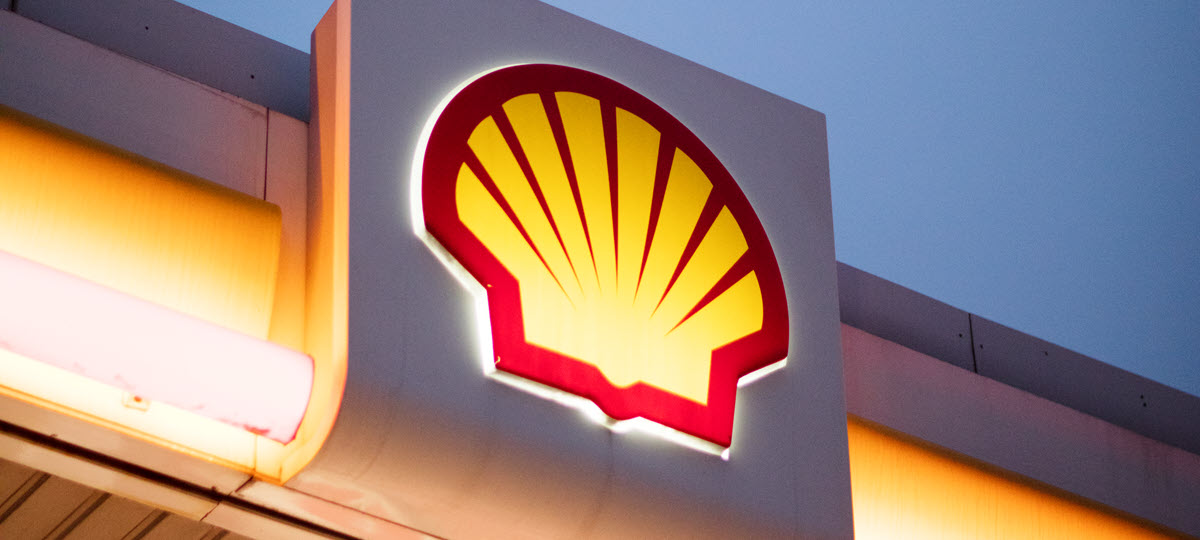
Shell began as an antiques business in London. Marcus Samuel expanded the shop in 1833 to include seashells, popular in interior design at the time. In the 1880s, his sons took over and entered the oil exporting business.
Today, the company’s downstream operations serve around 32 million customers a day at 46,000 service stations (approximately 12,000 Shell-branded fuel stations in the United States) and provide products to more than a million business customers across 160 countries.
Shell is currently focusing on three main initiatives centered on retailers and wholesalers. “We started to focus on these initiatives starting in 2020 but we really brought them to life in 2023,” said Barbara Stoyko, senior vice president, Shell Mobility Americas. “We call them ‘must wins.’ The way we look at that is how do we win nationally as a brand and product, and how do we make sure that our wholesalers and our retailers win in their markets? Really compete with whoever their top competitors are and be successful with the consumer because they have Shell.”
The initiatives—which focus on fuels quality, loyalty and technology—are deployed nationally, but really have local impact and can also be customized to add even more impact.
Fuels Quality
Shell launched a major campaign in 2023 called Performance Unbound, which focused on fuels performance.
“We find in our consumer research that fuel quality remains very important. We have several different customer segments that we go after. Some rank fuels quality as the most important brand issue,” Stoyko said. “We call these the ‘road warriors’ who are primarily focused on premium fuels and premium experiences. We are also working to tap into the younger consumer base and not just the mainstream users, and that is where you tend to find many of the road warriors.”
She noted that road warriors really care about fuel quality because they invest in their cars and tend to value performance. The cars don’t just sit in the garage waiting for the weekend but tend to be daily drivers. As noted, many are relatively young, in their twenties and thirties. In an interesting marketing twist, Shell has developed a relationship with the online gaming platform Fortnight to develop its own game using the Fortnight platform.
More broadly, many of the high efficiency engines today have high compression and require premium. “You’re starting to get a customer base that understands that, and Shell V-Power NiTRO+ is the way that they can make sure that they’re protecting their cars and getting the most performance out of them,” Stoyko said.
Loyalty
Stoyko pointed out that PDI’s Fuel Rewards loyalty program, which is used by Shell, has over 25 million members and has reached nearly 30% penetration among its customer base.
“The loyalty program has been a huge strength for us,” said Stoyko. “We have a number of big elements we recently launched, and I really want to see them come to life and be impactful for our retailers and for our consumers.”
For starters, in addition to the silver tier’s three-cent discount and the gold tier’s five-cent discount, there is now a platinum tier with a 10-cent discount. Offerings can be stacked from such companies as T-Mobile, GrubHub and American Airlines. They also put money on the table that can be converted into cents-per-gallon, and a lot of consumers can come in well over a 10-cent-per gallon depending on what they have purchased over the last month. A retailer can set it up so every time a customer spends $25 at the store over a period of time, not just one occasion, they will get another number of cents in their basket.
The program also comes with convenience store offers.
“We don’t have our own invested network across the United States, but we do put together c-store offers because that’s important for both consumers and retailers,” Stoyko said. “The loyalty program allows them to put offers on the table that stack on top of our offers. For example, we’re one of the largest buyers of Red Bull in the world. They’ve come to the table with some great deals—a certain cents per gallon if you buy two Red Bulls, etc.”
The program builds on continuity, so it doesn’t have to be the same purchasing opportunity. It can track purchases through a customer’s loyalty program ID.
Technology
“I think we led the industry 10 years ago when we launched Shell Vantage. That was the first-to-market electronic payment solution (EPS) that allowed a lot more flexibility in the way site systems are managed and developed and the way offers are pushed into the point of sale,” Stoyko said. “We are now launching the next version of that, Shell Edge Pro, which we think is on the cutting edge and ahead of our competition.”
She noted that it increases flexibility, allows offers to come to market more rapidly and provides more customization of different store offers while being faster. “That’s important to consumers who are looking to just fuel up and get on their way,” she said.
Shell Edge Pro is a modular technology with a focus on long-term reliability, which Stoyko noted is the primary concern for retailers. The modular design with the move to EPS allows for rapid customization with minimal coding. The first box is provided free to the retailer operator.
“A big push for us this year is to get everybody moved over to Shell Edge Pro, and converting a site is rapid—15 to 20 minutes,” Stoyko said.
Expansion
Is Shell in expansion mode for retailers and wholesalers?
“I think we have the best wholesalers and retailers in the industry,” Stoyko said. “We’re really looking to grow with them. We’ve had record growth the last three or four years—well over 200 million gallons a year.”
She noted that Shell is looking to add new wholesalers where there are needs. “In some markets we have wholesalers that really can continue to grow and meet the customer’s needs. In other markets, there’s less opportunity,” she said.
For retail operators, the most important thing is that they can represent the Shell brand and all of the consumer value propositions.
“The worst thing would be to have a consumer show up and not be able to get all that they expect from the Shell brand,” Stoyko said. “So, what I’m looking for first and foremost are engaged wholesalers that can bring to life a quality experience that matches the quality fuels and maximizes the loyalty program.”
As a wholesaler benefit, Shell offers the Shell Mobility Academy, an extensive training program for site sales staff that teaches them how to leverage the Shell brand at their sites. There are programs in place to support its wholesalers who are seeking dealer business.
Shell also provides incentives for site staff to get customers to scan a QR code or sign up for Fuel Rewards.
“The first time a customer makes a purchase of fuel, the cashier gets $3,” Stoyko said. “That can make a difference. It creates a value proposition for the employee and aligns motivation. Our site staff are so good with people, you give them some tools, give them some training and the ones that are into it will really knock your socks off in terms of numbers. So that’s been fun.”
Carbon Reduction
Shell has been one of the major oil companies on the forefront of the carbon reduction push. On the liquid and gaseous fuels front, the company offers E15, E85, renewable diesel, biodiesel, hydrogen and other offers on a market-by-market basis.
“Whether they want traditional fuels, renewable fuels or EV charging, I want our customers to get what they need from Shell,” Stoyko said. “We have 25 million people in our loyalty program, the number one position in market share and brand share preference. So how can we transition them from where they are today to where they’re going tomorrow and not give them a reason to go look elsewhere?”
She noted that Shell is making a lot of investment on the EV front.
“We’re probably making more investments than most other majors in that area because I want to make sure that when the customers are ready, we have a super strong commercial offer to provide to the consumer and the retailer.”
She noted Shell is making preliminary investment at retailer locations, showing them how it works and observing what the demand is in markets. Shell is researching EV consumer shopping behavior and is exploring how to integrate EV customers into the company’s loyalty strategy.
“Most people are going to have one of each car in the short term, and so even between fuel and EV a given customer may go back and forth,” Stoyko said. “As I noted, I don’t give a customer a reason to go anywhere else, but I also want to make sure that retailers feel like they have what they need if they’re in a market that’s moving quickly. So, we’re really focusing on the markets that are really outpacing the others in terms of EV demand.”
COCO Sites
In 2022, Shell signed an agreement to acquire 248 fuel and convenience retail sites from the Landmark group of companies, whose convenience stores operate in Texas under the Timewise brand. The agreement also includes supply agreements with an additional 117 independently operated fuel and convenience sites. Of these, 172 are company owned, company operated (COCO) and 12 are company owned, retailer operated (CORO).
In February 2024, Shell signed an agreement to acquire 45 fuel and convenience store sites in New Mexico through the acquisition of Brewer Oil Company’s (BOC) retail division. BOC and Shell have had a long-tenured relationship, with BOC acting as a Shell wholesaler since the 1970s.
What motivated the return to company-owned, company-operated sites?
“Having a core network of company operated locations can be beneficial,” Stoyko said. “In the big picture, with the energy transition, we are really setting ourselves up for success over the next 20-30 years. It provides us with a more integrated margin picture versus just fuels. So, we get a portion of our businesses coming from a business that has retail margin, store, car wash, those things.”
Stoyko noted that it doesn’t detract from Shell’s traditional wholesale and retail relationships. In fact, this provides Shell with a test bed for new retail concepts and operational initiatives.
 Keith Reid is the editor and editorial director for Fuels Market News.