
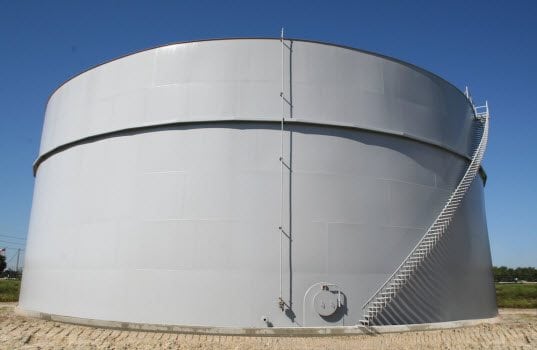

To FMN from Fisher Tank Company
Subcontractors can be an integral part of major projects, and if above ground storage tanks are involved a tank contractor and other tank-related experts are likely to be part of the picture. Tank contractors, painters, foundation contractors and others may work directly for project and facility owners as well as for EPC firms, general contractors and other entities. Tank builders work with developers, owners, EPCs and GCs to provide engineering, fabrication and construction of tanks or to carry out API 653 repair work, tank maintenance or modifications to existing tank assets. Field erected tank contractors often rely on their trusted subcontractors to handle things like soil remediation, foundations, insulation, hydrotesting and other aspects of the overall tank project. Whatever the contract/subcontract relationship(s), successful projects depend on clear communication and coordinated execution in all cases. Here are some tips for start-to-finish subcontract success:
Provide the Sub with All the Info
Providing a comprehensive RFQ is essential. If the subcontractor has a crystal clear picture of what you need, it’s much easier for them to produce a proposal that’s equally clear, whether they’re offering a proposal directly to a project owner or to an EPC/GC who’s bidding the larger project. If you are seeking a subcontractor, consider what you already know about the project and/or your typical work. Are there aspects of your work that you normally subcontract? Can you identify the usual scope of work for things you commonly do? Working with your team to develop templates for your subcontractor requests can help streamline your bid process and ensure that you provide your potential subs with all the information they need. This is the kind of work that productivity guru Steven Covey calls important (as opposed to urgent). It’s hard to take the time to do it, but the payoff can be tremendous. When it’s time to request a quote from a sub, and you can give the sub a comprehensive RFQ that outlines everything you need you will avoid a lot of nasty surprises.
Understand the Subcontractor’s Full Scope of Work
Is the sub providing a proposal that meets your needs and covers all the appropriate bases? If you are asking for a quote on Project X, and you get a proposal for Project X, it’s easy to assume that the subcontractor has offered a price on what you needed. That he/she has heard what you needed, and made a proposal according to your request. But is the proposal what you needed? Clear communication about what you need from the sub (i.e., your comprehensive RFQ) and about what the sub intends to do is vital. How often do others hear what they think you said – not what you actually said or meant? A thorough review of the sub’s proposal, along with discussion about their plans for project execution, should be part of the process so that everyone is absolutely clear on what work the subcontractor will perform.
Know the Sequence of Events
Knowing the sequence of events for a project will require some front-end work. It’s important to identify all of the major milestones, and the steps that will lead up to each one. When will the hand-offs occur? When will each subcontractor finish their particular scope of work, and when will new subs need to come on to the job site? From the number of workers on the site and security clearances to lay down areas and space for vehicles, knowing what’s going to happen and when will go a long way toward avoiding delays and making efficient progress on the job. Having a clear picture of the order in which things need to happen before the job gets started helps with scheduling, but it also helps prevent unforeseen costs as the project moves forward. Visualize the sequence, put it on paper or on a white board, and get input from those involved, from the very beginning of the project through completion. Visualizing the steps to success worked for Michael Jordan; it can work for you.
Identify Exclusions
In addition to understanding exactly what the subcontractor plans to do, and when they’ll do it, it’s essential that you know what they won’t do. Exclusions can be the bane of many project managers. Just like that awesome 50 percent off coupon that excludes anything you might want to buy, subcontractors’ exclusions can put a major damper on a project. If you’re getting pricing from a sub to include in your own proposal, any exclusions must be identified early on so that you can make allowances in your bid, or seek additional resources as needed. No one wants to end up eating the cost of doing what the sub said he wouldn’t do way back on page 19 of his proposal. The bottom line here, of course, is communication. Provide all the info you can to the sub. Read the sub’s proposal. Look for exclusions, and confirm in writing any specific needs you have that could possibly be problematic.
Investigate Pricing Differences
Pricing differences, properly investigated, can sometimes shed a great deal of light on potential problems and potential solutions in a project. For tank builders, every tank can be a custom project, and proposals may be generated based on very limited information. One tank contractor might end up significantly higher than another, because their proposal included different elements, such as cathodic protection, insulation, roof options, etc. or significantly lower based on the team’s understanding of the project and experience with that type of application. Sometimes pricing differences are just a communication issue, sometimes they can indicate an issue with the project scope and sometimes they’re reflective of other things but they shouldn’t be disregarded. Here’s another opportunity for communication with the subcontractor; discussing pricing difference might reveal errors, differences in interpretation of the scope, exclusions or perhaps issues and solutions the sub thought of that you had not considered.
Move Ahead Only when Documentation is in Place
We all know what happens when you assume things… Moving forward with a project before every “i” is dotted and every “t” is crossed is a recipe for disaster — or at least costs that were not in your plan. For example, a tank contractor recently performed some API 653 repair work for a long-time customer. The work required fabrication of a standard part, and to expedite the project the contractor began fabricating the part in preparation for mobilizing on site and doing the tank repairs. However, the contractor did not actually have the drawings in hand… . The customer had made a slight change to the standard design for the part the contractor had already fabricated. For the sub, that meant time and money lost. In addition to drawings and other project info, it’s important to have qualification information for subs in place before the project begins. Safety and licensing problems are not something you want to learn about after you’ve committed to a sub. No matter how long you’ve been working with a subcontractor, or a customer, it’s always a good idea to make sure you have all the information and all the documentation in place before moving forward with any part of the project.
The bottom line for anyone working with contractor/subcontractors on either side of a project is this: you get what you give. Successful subcontracts depend on front-end effort and on good communication throughout the process. Taking steps to issue better, more effective RFQs, and to establish clear communication throughout the proposal process can significantly improve the effectiveness of your projects. Visualizing the entire project and the sequence of key events, understanding the subcontractor’s proposed scope of work, providing potential subs with comprehensive project info, identifying the sub’s exclusions, checking out and discussing pricing differences, and making sure all documentation is in place before moving forward can help your project team and your subcontractors work together to ensure successful storage tank projects.
Fisher Tank is a leader among storage tank companies in the US for stainless steel storage tanks and welded steel tanks, across numerous industries. www.FisherTank.com or 610-494-7200