
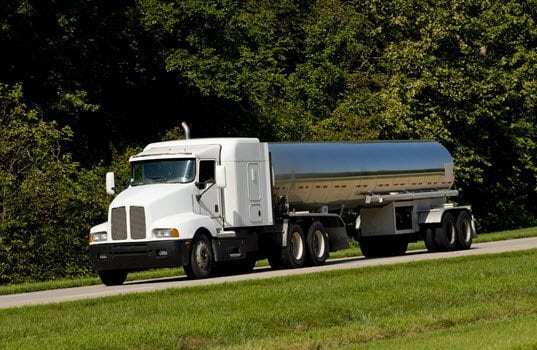

- Rear-end collisions caused by delayed perception and application of vehicle brakes.
- Side swiping during lane change caused by reduced space cushion.
To determine if your organization’s vehicle crash rate is affected by the inappropriate use of cruise control, a thorough analysis of all crash data for a period of at least three years should be completed.

Analyzing Vehicle Crash Rate
Ask Questions
- What type of crash occurred and how long from the last rest stop did the crash happen?
- How many on-duty hours preceded the crash?
- Did the crash result from running off the road (on a straight away or curve), being rear-ended or changing lanes?
Document Road Factors
- Note contributing environmental factors such as rain, ice, snow, traffic and road conditions.
- Document other factors, particularly if the cruise control was in use. Cruise control increases the risk of crashes in slippery conditions, on narrow roads or in heavy traffic, especially after more than one hour of continuous use.
Review Driver’s Logs
- Review the driver’s logs—specifically, rest stops, on-duty time and the timing associated with the crash—along with the traffic, weather and road conditions. This data should be available in the driver’s logs and crash investigation reports.
Conclusions
The use of the cruise control on commercial vehicles is an effective short-term method to provide a break from right leg fatigue during long-term application of the accelerator pedal. The risks of prolonged usage of cruise control increases the risk of rear-end collisions, collisions during lane changes and run-off-the-road accidents resulting from increased mental fatigue, reduced situational awareness and increased reaction times.
Drivers who are already fatigued are at risk of further reductions in alertness when using cruise control. The use of cruise control is not recommended during any type of weather event or in city driving with heavy traffic. Many transportation safety organizations, including the National Highway Traffic Safety Administration (NHTSA), American Society of Safety Engineers (ASSE), American Trucking Association (ATA) and all the vehicle manufacturers, have issued cautionary statements in the use of cruise control.
Michael Davis, CSP, ARM is Senior Vice President, Lockton Risk Control Services. Michael can be reached at [email protected]. Lockton Risk Control is available to assist with data analytics, report preparation and executive presentation.
 References
VINCI Autoroutes Foundation for responsible driving, Cruise Control and Speed Limiters Impact on Driver Vigilance, Press Release. July 30, 2013.
University of Strasbourg, André Dufour & Olivier Després, Center for Investigations Neurocognitive & Neurophysiological Research.
Report CI2N Influence of Speed Limiter and Regulator of Driving Habits. January 9, 2013.
U.S. Department of Transportation, Intelligent Cruise Control Field Operational Test. May 1998.
General Motors Fleet and Commercial, Safe Driving with Cruise Control.
Bureau of General Services—State of Maine, Cruise Control Driving.
NIOSH, Use of Cruise Control in Rain or Icy Conditions. September 2006.
American Society of Safety Engineers, Safe Driving Tips for Bad Weather. February 4, 2011.
American Trucking Association, Smart Driving Tips. January 2016.
Federal Highway Administration, Research Development & Technology, Human Factors Analysis, Cruise Control. October 2013.