
How Mirabito reduces workload and enhances the customer experience through effective technology integration.
This article is brought to you by ADD Systems.
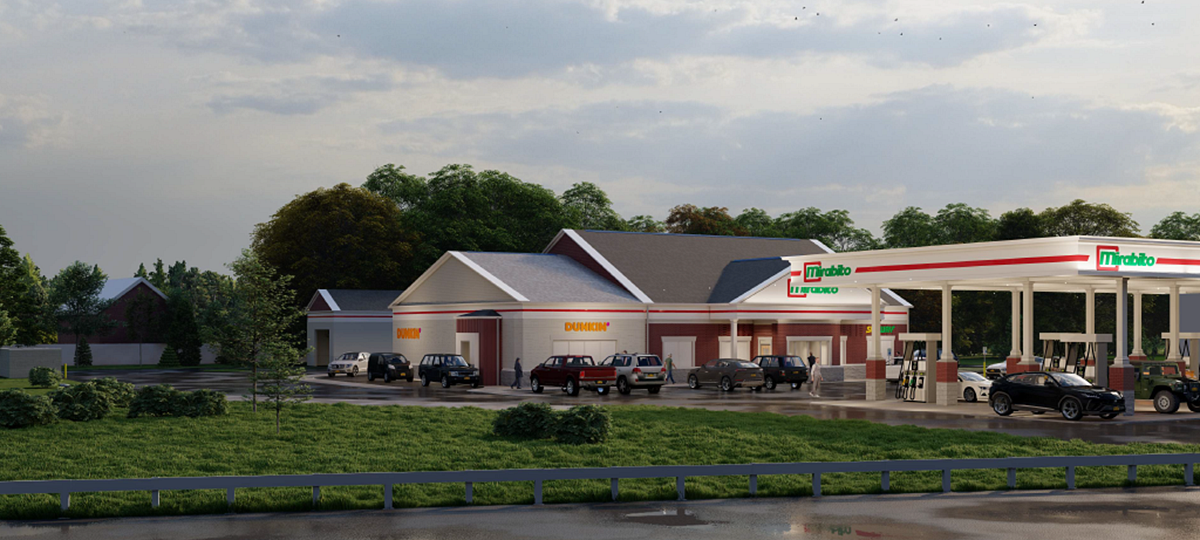
New York-based Mirabito Energy Products has a diverse operation blending wholesale and retail fueling (including residential fuels and services) that creates a range of general operational challenges. However, as with all retailers, the store itself creates a universe of challenges that must be managed. Convenience retailers have aggressively embraced technology to unify operational control, improve customer service and maximize efficiency. Mirabito, which operates over 100 convenience stores in New York and Pennsylvania, has embraced those opportunities.
“Bringing tech into your operations can be a whirlwind–you’re inundated now as with every other retail sector,” said Eric Bunts, Mirabito’s chief information officer. “We’re heavily invested in loyalty, private payment, have our own proprietary food offering and franchise partner food offerings. We have a little bit of everything. Trying to get cohesiveness and consistency across the chain is a challenge, and while technology itself can’t solve everything it certainly helps level everything out.”
Bunts noted that the tech environment has significantly improved over time. There is more collaboration between the hardware manufacturers, back-office providers and the numerous “bolt-on” solution providers fulfilling the range on niche capabilities. Mirabito is virtualizing its environment to move from as many as nine dedicated pieces of hardware to 1-2 server configurations.
“With, everything becoming “dummy terminals,” ultimately, that facilitates mixed use,” Bunts said. “Take the register at the counter. When it’s very busy I can have one register being used for employee-driven checkout, while another one faces the customer and becomes self-checkout and a third for foodservice. The ability to alter the configurations and engagement points on the fly for not only your customers but also your employees is probably the most transformative aspect of what we’re seeing retail-wise today.”
Mirabito uses technology to drive efficiency in the store environment for everything from mobile food ordering to item-level inventory controls, which itself got off to a difficult start.
“We started item-level inventory in a store probably nine years ago, and then we just stopped to focus on other initiatives,” Bunts said. “Now, that we’re growing our internal food program, we realized we can’t do this anymore. We need to know what products we have and then bring them under tighter controls.”
Today, Mirabito uses ADD System’s eStore for overall item-level inventory.
 The journey hasn’t been without a few stumbles. As with many retailers, Mirabito has a mobile app used for both home heating and convenience customers that provides them with a range of capabilities. Bunts noted that the mobile app originally looked and functioned like it was “built by developers for developers,” which is not great for the consumer experience. Through collaboration with marketing and operations, the functionally has been significantly improved. Mirabito has its own internal development team and incorporating mobile food ordering was a hybrid process across providers.
A major concern was to avoid having a customer order a food item, then have the customer experience suffer when the item isn’t available at redemption.
“You order something, pay for it, show up and hear I’m sorry, we’re out of that,” Bunts said. “You’re standing there, you’re running late and you can’t give the money back. So, we spent a significant amount of time, effort and energy putting together a solution that prevents that. At the very least, we could give their money back—that’s the bottom line. But, more importantly we want to be able to proactively remove that concern altogether by only offering products when they are available.”
As a part of that, with other efficiency benefits, Mirabito brought item-level inventory-based recipe management to the food service prep process through eStore and Atlas Reporting.
“This capability helps us standardize, not only from a cost basis, but the consistency in the product offering,” Bunts said. Take Mirabito Pizza. We’re working to make that as consistent as possible, and that goes beyond just the ingredients. It’s the type of oven you use, for example. But starting out with having the right product mix, having the right ingredient development and controlling that from a reporting aspect becomes a significant part of the overall strategy.”
Loyalty programs are likely the most obvious application of technology when considering technology that impacts the customer/retailer experience. Mirabito offers Reward Plus Loyalty (including debit and credit cards) for its customers.
“AI’s a buzzword today, but big data analytics was the buzzword previous to that,” Bunts said. “Previously, loyalty was very much about partnerships with suppliers and pushing products that were felt to bring a general value for the customer on large scale. Now, I think loyalty is much more intimate. Technology, through data analytics, allows us to intrinsically become more engaged with the customer on an individual basis and do that consistently.”
ADD Systems facilitates the data for the nuanced background customer information to fine tune the loyalty offers.
He noted a comparison to Amazon, where offers can be pushed to customers that they were previously unaware of, but are so appropriate that they not only generate sales but sldo enhance the customer experience. The process to reach that level of interaction can seem daunting, but Bunts noted that with the right development process, starting with data capture, it’s manageable for convenience retailers.
More loyalty development is in the works on the foodservice side. Mirabito franchises some quick-serve restaurant locations tied to some of their stores, Subways and Dunkin’, for example. The company is exploring how they can combine those operations for an overall loyalty experience for the customer.
Mirabito has a robust, in-house fleet card program that not only facilitates payment but that is linked to the company’s loyalty program.
“We wanted to create an even larger value proposition for what can be our stickiest customers,” Bunts said. “When you look at credit card fees and how they’re continuously increasing, instead of giving that to the credit card company we wanted to reinvest that back into the customer.”
Mirabito expands its overhead for customer rewards through the ACH aspects of the card program and by becoming its own processor.
“That program has allowed us to give deeper discounts to the customer, to show them an increased value proposition and a more streamlined customer experience with one identifier traversing both networks,” Bunts said.
In a tie back to the home comfort side covered extensively in Part 1, loyalty is further tied into their home heating fuels customers, linking what have traditionally been two very separate sides of a diversified energy provider.
“We want our customers who are getting home delivery to get increased value at our stores, and vice versa,” Bunts said. “It has allowed us to create this ecosystem where we can offer payment discounts when you use your Mirabito card for your home fuel, as well as double loyalty points for the store, and so forth. It creates an entirely new value proposition and even applies to the third-party natural gas and electricity services we provide.”
Mirabito illustrates the winning attitude for utilizing technology. From improving dispatching for home heating fuels, to mobile fueling and wholesale fuel delivery and finally to supporting the many challenges and opportunities with convenience retail, technology is something to enhance the journey and not be a destination in and of itself. It should make operations efficient, improve profitability and increase the experience not only for the customers, but for those working to meet their needs.