
Here are some factors impacting our energy landscape today:
- Chinese demand for transportation fuel will add 600,000 barrels per day to world demand as vehicle population in the PRC grows 10% driven by Chinese urbanization and improvements in internal transport.
- A 25% swing in electric generation from Coal to natural gas and diesel driven by environmental mandates in China will remove 500,000 tons of coal adding another 5 million bbl/d to hydrocarbon equivalent demand.
- Announced capital expenditure budget cuts for E&P are 200 billion for 2015.
- Usage in the United States is beginning to pick up as well as a trend toward larger traditional vehicles.
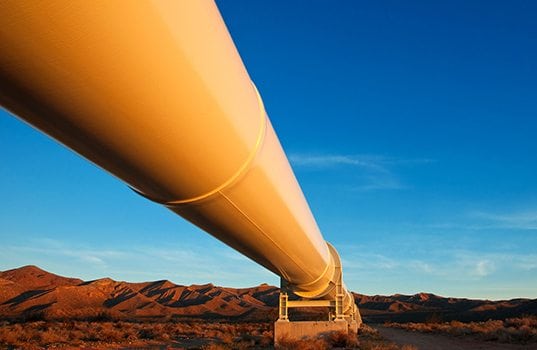
Of course we still have huge price discrepancies (heating oil is 30 cents cheaper Gulf Coast than New York Harbor (Jones Act tanker regulations). And, it costs 50 cents a gallon to move crude to a refinery by rail car when a pipeline could do for 10 cents per gallon (XL Pipeline). The XL would also ensure refinery operations (national security) and preserve 41,000 jobs paying $60,000 per year, on average. It also would facilitate energy exports which would help Chinese and EEC economies that are dragging on U.S. economic growth. Exports to China would additionally help wean them off coal—if we are truly concerned about the environment and not simply posturing at fund raising time.
Building the XL, repealing the Jones Act and exporting energy will all help capital spending, energy security, net exports and GDP. Capital spending is $2.7 trillion of our $17 trillion GDP, and 15% of that is traditionally spent in the energy sector. With lower energy prices, we have announced reductions of almost $400 billion in E&P related projects. A good export LNG plant costs $10-$20 billion, and this country needs several. The XL Pipeline is a $5 billion project. Other pipelines interconnecting supply to demand regions, like the one connecting Marcellus gas to the East Coast, represent $100 billion in capital spending. New natural gas-fired power generation plants, an enhanced power grid and the hardening of assets against man-made and natural dangers could add another $500 billion to capital spending. All of this is private capital spending, but requires government leadership or at least non-obstructionist policies like 5-year “study” periods.
As for exports, while we have made huge strides in energy independence (defined as how many BTUs we consume versus how much we produce). That ratio is at 0.85. With further efficiency advances and more shale production we will exceed 1.0 on that ratio, setting us up to be a significant energy exporter. While we could be the Saudi Arabia of natural gas and light oil, our aspiration should be to eliminate our $500 billion trade deficit with a $400 billion surplus (what a 10,000 bbl/d export program could do). This alone would add 1 percentage point to GDP. Further allowing Japan, China and the Europe to benefit from cheaper energy would bolster their economies (helping the United States), and have positive geopolitical implications. When your adversary is on the ground (Putin and Islamic fundamentalists) it is the time to put your foot on their throat.
While energy prices have bottomed and it is unlikely we will spike back to $100 plus levels any time in the near future, we still are connected to an insecure world and any investment in infrastructure that interconnects us to each other and our Canadian neighbor is critical to American security and prosperity. Building the XL pipeline and other energy infrastructure is good for our security, good for our economy and good for our environment (when the alternative is to move product by rail or deep water drilling). While we should enjoy today’s energy surplus even a squirrel understands the time to make plans for adversity is when the sun is shining.
 Joe Petrowski has had a long career in international commodity trading, energy and retail management and public policy development. In 2005, he was named President and CEO of Gulf Oil LP and elected to the Gulf Oil LP Board of Directors. In October of 2008 he was named CEO of the now combined Gulf Oil and Cumberland Farms whose annual revenues exceed $11 billion and that now operates in 27 states. In September 2013, Petrowski stepped down as CEO of The Cumberland Gulf Group. He is now managing director of Mercantor Partners, a private equity firm investing in convenience and energy distribution.