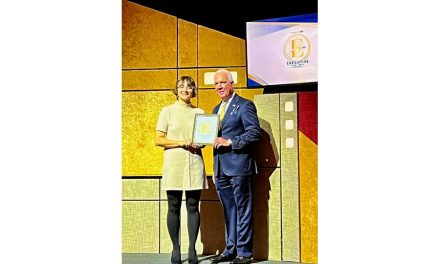

A closer look at his career in tech leadership for both Rutters and the industry at large.
By Keith Reid
The level of technology driving virtually every aspect of convenience retailing and fuel marketing is practically taken for granted today—as little as 25 years ago the industry was largely a paper world filled with manual processes. Business got done, but the pace was slow, the processes inefficient and the controls and ability to be proactive with data highly limited.
Scott Hartman was at the forefront of the technology revolution that began moving through the industry in the early 1990s onward. He represents the 10th generation in the Rutter’s Farm Stores business, which dates back to 1747. After spending seven years at Price Waterhouse (now PricewaterhouseCoopers) he returned to the family business in 1990, first as CFO and vice president of operations and then CEO. In 2003, he became president and CEO of Rutter’s Holdings, operating Rutter’s Farm Stores, Rutter’s Dairy and M&G Realty.
Hartman was a core leader in promoting NACS efforts supporting the rise of technology in the industry. He helped launch the NACStech Conference and the NACS Technology Standards Committee was formed with Hartman as chairman. He went on to chair the NACS Technology Council, served as a NACS Executive Committee Member for more than 10 years and was chairman of NACS in 2005.
Here we look back at the rise of digital technology in the industry.
Describe your entry into the world of tech?
After college, I worked for seven years at Price Waterhouse from 1983 to 1990 doing consulting. While at college I was programming on mainframes, and in the Price Waterhouse years it was minis—then they came out with a thing called a Mac. I think I was the first guy in all of Price Waterhouse to have one and did a lot of work showing them what the Mac did and suddenly everybody was getting one. The laptops then probably weighed about 45 pounds and you needed a big lap.
What happened when you returned to the family business?
I decided to leave Price Waterhouse when I was a senior manager and came back to the family business to see how I liked it. I used to work summer jobs in the family business before I went to Price Waterhouse and when I came back nothing had changed.
We had a dairy and the stores—and from a tech standpoint everything was still being programmed and run on punch cards in a massive, air-conditioned room. So one of my big things was to use my skills and see if I could advance the business into the new, coming world.
On the convenience side, I would go to tech shows, such as they were. One of the very earliest attempts at tech for NACS was called the Tabletop Technology Show, and it was in Atlanta around 1992. They’re trying to show people they can scan something or run some sort of software and so they were the early tech vendors. But at that same those cash registers were at that show, cash registers were in stores with four-department or six-department buttons.
I remember when I entered the industry in 1999, scanning was still a sell for the industry.
When I did paperwork in my younger days in the stores, everything was manual. It was pencil, paper, add this up, subtract this on a calculator and do your bookwork. You would literally take a tape off the register that would show your departmental sales and you’d write those on a piece of paper. And then you’d go add all that up and bingo. It would tell you that you’re $2,000 short inventory. And then you’d have to go back through and figure it out. Did someone have a fat finger? Was somebody stealing? So, all of that, then I realized scanning will help solve some of this.
That was a big step forward. Not only was a store manager stuck in their office for hours every day doing this mundane work, but then they’d drive it to the office. Once they got it to the office, you’d have these rooms full of people double checking it. So, all that stuff was very laborious, very slow because it could be weeks before you’d understand a discrepancy.
And then the back-office software was able to do the adding and subtracting and the bookwork. And you now had these wonderful things called modems. When I started, I think it was a 300 baud modem, and then—my god—2,400 baud and I thought I’d hit heaven. Then it went to 9,600 baud and higher to the broadband we have today.
Things started to move along more rapidly about this time, especially with the stores.
In 1995, we had the first meeting of the technology folks in Chicago to determine what the future of technology the convenience industry should be investing in. How might we move the industry? And a lot of it was to move into more standards for the exchange of information.
Amazingly, they had over a hundred people show up, and I was like, “Wow, there must be something going on here that so many people came in for a day meeting.” And that meeting launched PCATS, which is now Conexxus, a technology organization that focuses on standards. And the tabletop shows became NACS Tech which ran for a number of years until the tech component was rolled into the NACS Show.
The big point-of-sale platforms were moving into the industry as well.
I remember Brad McGinnis at Verifone came in. He and two others from Verifone visited and he had Per Data, his own point of sale and it was based out of Europe. Verifone was going to buy it. And they were going to write the ultimate software for the convenience store industry for point of sale. So, guys like him were the early ones in scanning. But they were coming from the angle of fuel pump integration.
And then you had pay at the pump. It was just like the discussion of scanning—should you, or shouldn’t you? Oh God, you do that, and nobody will go inside your store anymore. And it was expensive at the time too, but it was such a competitive advantage to have it. The oil companies were first.
It wasn’t that much longer before tech moved from the strictly functional to marketing and merchandising?
Nobody had a website before 1998. I remember getting interviewed on “what is this internet thing?” So, from ‘98 onward there was a lot of good stuff that was happening because people were getting desktops, laptops, the communication speeds were ramping up and the internet was really coming into play. I think the Apple iPhone came out two years later and then touch screens in retail solutions and such developed with Radiant.
In 2005, I went on a trip to Asia as the incoming NACS chairman. I focused on Asia as that was where a lot of technology and trends were going to come from. I went over there with a bunch of people who were involved in the food industry, mostly grocery. They took us to places like Samsung at the time—and Samsung was not a name that rolled off the tongue like it does now. I learned so much when they took us behind closed doors and showed us their vision of the cell phone.
And I came back and spoke at NACS in 2006. In my closing presentation, I said let me tell you what’s coming with this phone thing: This mobile device is going to do all these different things for you. It’s going to connect in your car; it’s going to be your in-store car billboard; It’s going to tell you what fuel prices are; it’s going to tell you where to go get food, drinks—all that stuff. This is how you’re going to talk to your customers.
Payment has been revolutionized by technology.
From cash to credit card, things have changed dramatically. What you once had was a card imprinter and inked paper. You’d lay the card in there, you’d run it through, the customer would sign it and you’d send a copy in with your daily paperwork and hope you got paid.
Then came card swiping and the integration into point of sale. Cash started to become less of a preferred payment, with a switch from cash to credit and debit and non-cash payment methods. Transaction processing speed was a huge improvement. Cash is still slow. It’s quicker than it used to be, but electronic payments are tap and go.
I think the payment processing world is more of a failure. It’s owned and run by the banks, and when you have monopolies that control access to the payment process, they’re not incentivized to invest in how to make it better for the community. They’re not vested to make it better for retail. They may want to cut down on chargebacks, but even then, that’s the retailer’s job. So, there’s a true lack of innovation. We could all be paying for stuff with a wedding ring with our socks, with whatever you want.
What are your thoughts on social media?
What social media was 20 years ago isn’t the same thing today. It’s much more interactive and moving information. You must be conscious that it’s going to get more regulation, not less regulation. I think you’re going to find that again, people move platforms from A to B to C, so you don’t want to put all your eggs in one because by the time you do people have moved on to others.
I think it’s likely to fade some because people are realizing it can be a bit of a pandora’s box leaving you vulnerable to some downsides in addition to the upsides. Social media can bring out great things for your business and representation, but if you watch it’s killed a few companies in a heartbeat.
From a practical standpoint you’ve made sure Rutters followed your tech leadership. What’s the corporate philosophy?
If you’re afraid of change, you’re going to be afraid of technology. But if you’re not afraid of change and you embrace it—you thrive on it. That’s what my team knows. We all love change, getting out in front and having fun doing it. It’s fine to make a mistake, but don’t make it twice. So, I think it’s a matter of your mentality and it doesn’t hurt to have some younger people helping you who are more current as you move through your life’s spectrum.
We were early in all that fun stuff. We were scanning and then we had loyalty programs, and we were doing discounts on fuel and all that stuff. And we got our mobile app—I don’t know which version we’re on now with the different providers. Food ordering, integration into the store—all that stuff is where we are here. We were the first ones to sign on with Gas Buddy to publish gas prices because I already had the vision from what I saw was coming.
It’s been a blast watching loyalty. You know, we were among the first ones pushing digital coupons in our apps. We had gamification in our apps before anybody. And then Apple made us take it out.
What prompted that?
Because we were using a casino feel and you could win stuff, but it was still basically a game against other players. But whoever won we’d give them some prizes and Apple said, oh, that’s gambling. They were going to have gambling and they just didn’t want other people in their space.
What has it been like seeing this digital revolution arrive?
As I look back on my life, my career, I was so fortunate to be in the right place at the right time on that threshold. From learning to program on a mainframe and seven years later carrying around a laptop to seeing technology revolutionize our business and our lives.
 Keith Reid is the editor of Fuels Market News.