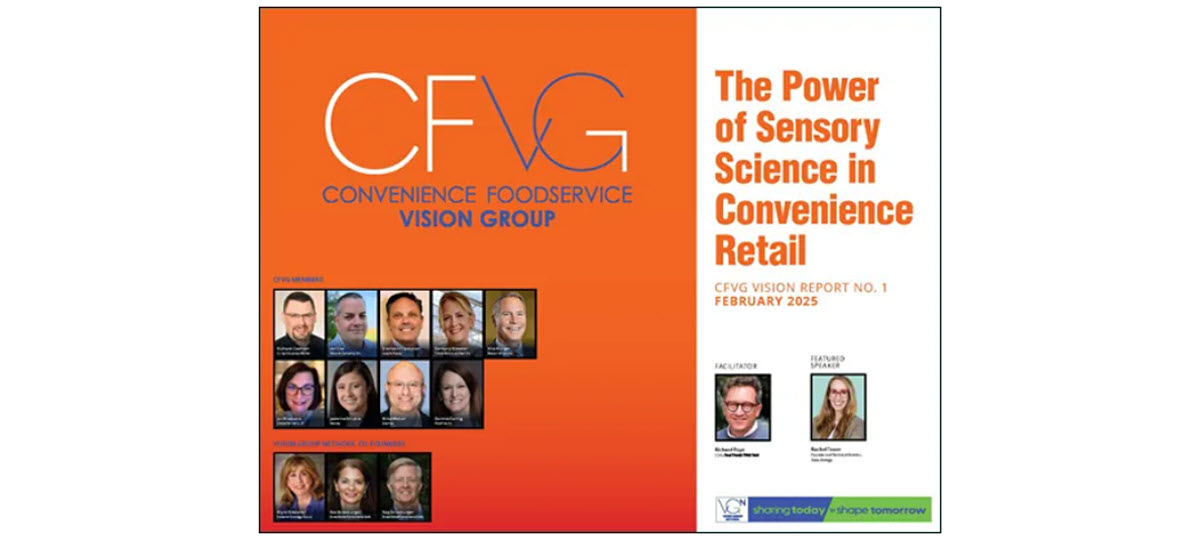

The Convenience Foodservice Vision Group (CFVG) has released its first Vision Report, “The Power of Sensory Science in Convenience Retail.” The report contains CFVG Views, an executive summary of a presentation and collaborative discussion on the impact of sensory science on business outcomes, the full meeting transcript and additional resources.
CFVG’s inaugural quarterly virtual meeting on January 23, 2025, was facilitated by Richard Poye, chief operating officer at Food Trends Think Tank. The meeting featured a presentation by Rachel Toner, founder and technical director of Taste Strategy. CFVG members shared questions and their own experiences in a lively discussion.
Key takeaways in the report include:
- Sensory Strategies for Convenience Retail: Presenter Rachel Toner emphasized the power of sensory science in improving consumer experiences and business success, urging retailers to view their stores through a fresh lens and leverage sensory data for innovation. She champions sensory and consumer feedback, stating sensory science “can be that secret sauce that can provide the data to inform how to improve the customer experience or how to outperform the competition.”
- Creating a Multisensory Brand Experience on a Budget: A strong sensory brand experience involves the harmony of scent, sound, visuals, texture, and temperature to shape customer perception. While large companies invest heavily in research, smaller retailers can take a practical approach by conducting sensory walkthroughs, testing prototypes, and gathering real-time customer feedback. According to Jon Cox, vice president, retail foodservice at McLane, “We’re all here because we feel like foodservice is the future of our industry and we owe it to the industry to be able to do quality food.”
- Ensuring Food Quality in an Omnichannel World: It is essential to maintain product quality and set clear customer expectations, especially with food delivery and e-commerce. Mike Weber, CMO of Upshop articulated, “You only have so much time to get it prepared and delivered, and I feel like that’s probably a much bigger challenge as you think about growing your business,” emphasizing that food delivery and e-commerce is going to “make or break the channel over time” and that there’s a “huge upside to taking foodservice to omnichannel.”
- Creating a Cohesive Sensory Experience: It is important to integrate foodservice, marketing, and operations to create a cohesive sensory experience. Facilitator Richard Poye said, “So much of this conversation is around food, but to me it’s about the entire store experience and how do you bring other partners in other areas of the store, whether it’s operations, marketing, other categories together to really think about sensory and how they could do it really well.” From the retail perspective, Jasmine Struble, senior category manager at Yesway, shared that Yesway “integrates foodservice within promotions in the center store. We have fuel rewards and that’s kind of our deal and how we’re trying to bridge that gap and get that awareness beyond the hot food case. We’ve been doing a lot of packaged beverage and foodservice synergies, so you see more of our burrito presence in the doors.”
- Overcoming Blind Spots in Customer Experience: Food retailers need to recognize issues that negatively impact customer experience including cleaning smells and even food odor. “Nobody wants to walk in and smell chicken. More importantly, nobody wants to walk out and get in their car and smell like chicken,” said Barbara Kessler, Senior Director, Food and Beverage at The Wills Group (Dash In).
A bonus worksheet for small operators was provided by Taste Strategy and is included in the report and on the Vision Group Network website.
To download this and other Vision Group Network Vision Reports, please CLICK HERE.