
Dr. Jeanne Riot, Industry and Market Analyst at Integer Research
The Diesel Exhaust Fluid (DEF) market is expanding strongly; consumption is expected to surpass 1 billion gallons by the end of the decade. Ensuring DEF is available across North America opens up new challenges and opportunities for fuel retailers and truck stop operators. How is DEF supplied and how is infrastructure evolving to meet the demands of increased DEF usage?
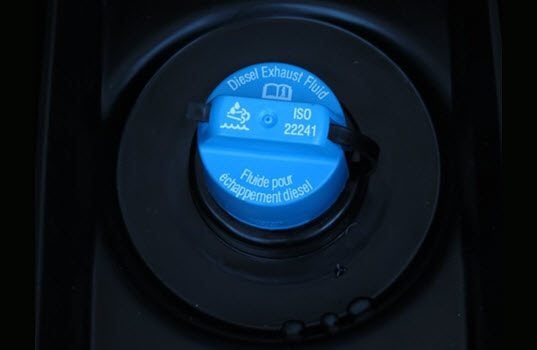
In line with increasingly stringent environmental regulations, one of the main challenges for diesel-powered vehicles is to keep engine NOx emissions low. All truck and several passenger car manufacturers have chosen to use Selective Catalytic Reduction after-treatment technology in order to meet requirements. To operate, this technology requires the use of diesel exhaust fluid, an aqueous urea solution.
DEF can be delivered in several formats and packaging options to serve different consumer segments. The smallest packaging options consist of 1 gallon or 2.5 gallon jugs. Easy to use, distribute and store, these can be used as a carry-on solution for heavy-duty trucks and for the majority of diesel passenger cars and light-duty vehicles equipped with SCR. However, these formats are more expensive and inadequate for larger consumption requirements such as those of truck fleets.
Bulk DEF deliveries are an option for truck and bus fleets that require larger quantities of DEF and choose to install permanent storage tanks. These fleets typically purchase DEF in volumes ranging from 500 to 8,000 gallons (full truck load deliveries). However, even if larger deliveries can help reduce costs for end-users, upfront investment remains significant and maintenance of these storage facilities is costly.
Businesses with a smaller number of vehicles requiring DEF and off-highway equipment owners can also rely on 275 or 330 gallon tote containers, which present an intermediate solution between jugs and bulk deliveries. Though cheaper and easy to store, totes present higher risks of contamination if not refilled correctly.
Retail pumps at DEF truck stops present an alternative for end-users. It is, however, worth noting that the price per gallon of DEF at the pump is higher than bulk deliveries pricing. This option could, in time, become an alternative to additional equipment investments, such as buried storage tanks or electric pumps at fleet terminals–the costs of which are currently borne by business owners. With pump delivery systems though, costs would shift from the end-user to fuel retailers, as they would be the ones making important infrastructure investments upfront.

The North American truck stop infrastructure has grown dramatically over the past four years. According to Integer’s database, more than 1,800 truck stops offered DEF as of October 2014. This points to a network that is now fairly well spread throughout the United States. On the other hand, the Canadian DEF retail network is still in its early stages, with only 71 locations currently in operation.
The ten states with the largest DEF infrastructure represent 45% of North America’s entire DEF truck stop network. Texas holds the largest number of DEF truck stop locations, with more than 150 sites. The other largest DEF networks in North America can be found in Oklahoma, Indiana, Ohio, Illinois, Tennessee and California. The only states that are yet to open DEF pump locations are Alaska, Hawaii and Vermont, with the latter being the only state in the contiguous 48 states without DEF pumps. In Canada, the province of Ontario has the largest DEF network, with 27 equipped locations operating in October 2014. Prince Edward Island is the only province in Canada with no DEF pump locations. None of Canada’s territories (Yukon, Northwest Territories and Nunavut) have opened DEF equipped locations yet.

Three main truck stop brands operate most DEF filling stations: Pilot Flying J, Love’s Travel Stops and TA Travel Centers. These were the first brands to install DEF at the pump and they now offer DEF at nearly all locations.
Pilot manages a total of 670 locations, of which 574 operate bulk DEF dispensers as of October 2014, and is present in both the U.S. and Canada. Love’s is the second largest operator in North America with 329 operated locations with bulk DEF available at all of them. TA Travel Centers operates the third largest DEF network in North America. It operates 208 locations under the TA name and an additional 41 locations operated under the name Petro, therefore TA’s total DEF network consists of 249 locations.
Other notable brands in the U.S. include Pacific Pride cardlocks, Speedway and Roady’s. They operate smaller networks compared with the major brands, but continue to expand month-on-month. In Canada, the other main brands are Petro-Canada and Husky, which are contributing to the expansion of Canada’s DEF infrastructure.
Despite this widespread availability of DEF dispensed at truck stop locations, some areas still remain uncovered by DEF pumps, especially on the West Coast and in Central Canada, where as a result, DEF is often delivered in bulk across long distances. DEF consumption is set to quadruple in the next ten years and several factors will impact its growth for example, the expected increase of diesel powered vehicle sales. According to Integer’s estimates, North American diesel vehicle sales will account for more than 2 million units across segments in 2025.
Another factor is legislation. After 2017, new targets to lower particulates will imply higher engine-out NOx emissions. Vehicle manufacturers will therefore increasingly resort to SCR technology to meet environmental targets and DEF dosing rates are likely to increase in order to reduce engine NOx emissions. Moreover, a combination of higher DEF consumption and fuel economy requirements is driving new smaller tank sizes based on a 1:1 refill ratio, which means refills will be more frequent. It is quite likely that the scenario developing for trucks will also expand to passenger cars, pickup trucks and sport utility vehicles, and that the sight of a wider range of drivers refilling with DEF at the same time as diesel will become more common.
 This article was written by Dr. Jeanne Riot, Industry and Market Analyst at Integer Research and contributor to ‘The DEF Market Dynamics Report’. Riot also covers North American DEF markets for ‘The Monitor’ and ‘DEF Tracker.’ Data in this article is taken from ‘The DEF Market Dynamics Report’. New from Integer Research, this report covers legislation, supply, demand and pricing and was developed to bring industry players fully up-to-speed with DEF market developments that have occurred over the last four years. Integer Research also publish ‘The Monitor’, a quarterly update on AdBlue, DEF and ARLA 32 prices and network developments, and ‘DEF Tracker’, a monthly DEF pricing reference. To inquire, please email [email protected].