
Automakers are increasingly requiring premium fuels for their new models.
By Joe O’Brien
Automakers are increasingly requiring premium fuel for their new models, which could have significant implications for fuel retailers. Previously reserved for luxury brands and sports cars, premium fuel requirements now extend to many popular mainstream vehicles.
How We Got Here
Ambitious fuel economy and emissions standards combined with the challenge of delivering the horsepower and responsiveness that consumers expect have compelled manufacturers to develop sophisticated engine technologies. Turbocharging, supercharging and high compression ratios are now fundamental to powering modern-day engines.
These higher compression engines squeeze more power from a smaller displacement, but there is a caveat: The use of lower-octane fuel in these sophisticated engines results in engine knock, which occurs when the fuel-air mixture ignites prematurely. Fueling the engine with high-octane gasoline (91 octane or higher) helps ensure the engine fires correctly.
, Premium gasoline was recommended or required for just 7% of new vehicles in 1985, according to the Department of Energy. Fast-forward 38 years, and manufacturers recommend premium for most light-duty vehicles. For model year 2023, manufacturers recommended or required 53% of new vehicle configurations to run on premium gasoline. Mainstream vehicle models, including the Honda Civic, Hyundai Elantra, Chevrolet Silverado and Toyota Tundra were on the list of 2024 models requiring premium-grade gasoline.
A Troubling Discrepancy Emerges
Although premium and midgrade fuel sales have increased (up around 2.5% from 2023 to 2024, per Upside data), they don’t fully align with new car sales. Regular gasoline still accounts for approximately 73% of all fuel sold. This disparity suggests that some drivers of vehicles requiring premium gasoline may be choosing regular unleaded instead.
Drivers may be unaware that their car requires high-octane gasoline if the dealership failed to mention it, they didn’t read their car manual or they overlooked instructions that may be posted on the vehicle’s gas cap. They may also be intentionally disregarding the requirement to avoid paying for higher-priced premium.
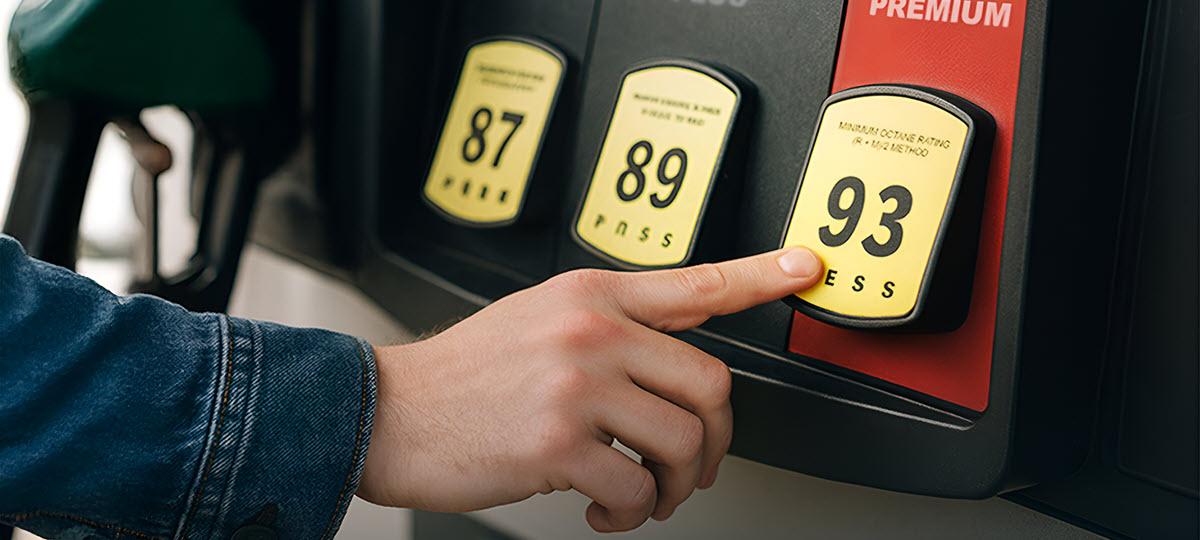
Using regular 87-octane gasoline in a vehicle designed for premium can result in reduced engine performance and responsiveness, as well as potential engine damage severe enough to cause a catastrophic failure. Modern computer and sensor systems can minimize the damage concerns, especially for newer vehicles, but the loss in economy and performance remains and consistently using a lower-octane fuel may void a warranty.
Pondering Premium’s Future
Looking ahead, fuel marketers face both challenges and opportunities regarding the sale of premium fuel.
With the prospect of less stringent tailpipe emission rules and fuel economy standards taking effect, it is plausible that automakers will slow their investments in advanced engine technologies over the coming years. With manufacturers planning their product line-ups years in advance, a shift will not be instantaneous. In addition, priorities have wildly shifted over the past few administrations, creating uncertainty for car manufacturers who may choose to retain some of their established technologies to avoid reinventing their line-up four years from now. How manufacturers shape their future product line-ups will be a strong indicator of the long-term outlook for premium.
Interestingly, a rollback to 2020 standards could result in consumers paying $8,000 more to fuel a less-efficient new vehicle model in 2029, according to a Consumer Reports senior policy analyst, which creates a favorable sales environment for c-store operators. Becausefuel retailers generally compete on the price of regular gasoline, maintaining a higher profit margin on premium fuel can help offset lower-margin sales of regular unleaded. If demand for premium fuel increases substantially in the coming years, it may disrupt long-established pricing strategies.
Regardless of what the future holds for premium fuel pricing, c-stores have an immediate win-win opportunity in front of them. If owners of new model cars are unknowingly putting the incorrect grade of fuel in their car, educating them about it at the fuel dispenser will pay off in two ways. First, a customer who is appropriately informed about the damage they could be doing to their automobile by putting a lower grade of fuel in it will probably be more motivated to choose higher-margin premium. Secondly, they will likely be grateful for their newfound awareness, which could boost loyalty to that c-store.
With interactive touchscreen dispensers becoming more commonplace, presenting customers with a digital tool that lets them look up what kind of fuel could/should go in their vehicle is definitely within the realm of possibility. If done correctly, it could promote proper fueling while also boosting sales of premium and higher ethanol blends.
 Joe O’Brien is vice president of marketing at Source North America Corporation. He has more than 25 years of experience in the petroleum equipment fuel industry. Contact him at [email protected] or visit sourcena.com to learn more.