
For more than 100 years, from its founding in 1909 to when it went out of business in 2013, National Petroleum news (NPN) documented the rise of petroleum marketing and retailing in the United States. NACS, PEI and the Fuels Institute have cataloged the rich history of NPN in its entirety. Remember This looks back on the history of our vibrant industry, through the eyes of NPN, to see how it reflects the issues challenges and opportunities we face today.
By Keith Reid
Practical, digital computerization dates back to the post-war 1940s with such systems as Britian’s Colossus and ENIAC in the United States. They were initially applied to such tasks as military ballistics calculations and thermonuclear research. Over the next 20 years, this technology matured to where it became increasingly adopted by businesses. Initially it was used by large corporate entities that could devote the millions of dollars, staffing and significant square feet required for the mainframe computer systems of the day. Today, the typical smartphone outpaces the most powerful computers of that era by a significant margin. And yet, even then the ability to digitize and automate certain tasks created revolutionary efficiencies.
The arrival of one such system to the downstream petroleum marketing industry was described in the June 1968 issue of National Petroleum News. The unbylined article, “How to Get Useful Information Out of a Computer in a Flash” described how the oil company Atlantic Richfield (ARCO) figured out how to “pick a computer’s brain for data on a specific account while the account is on the phone, without taking too much time–yours or the account’s.”
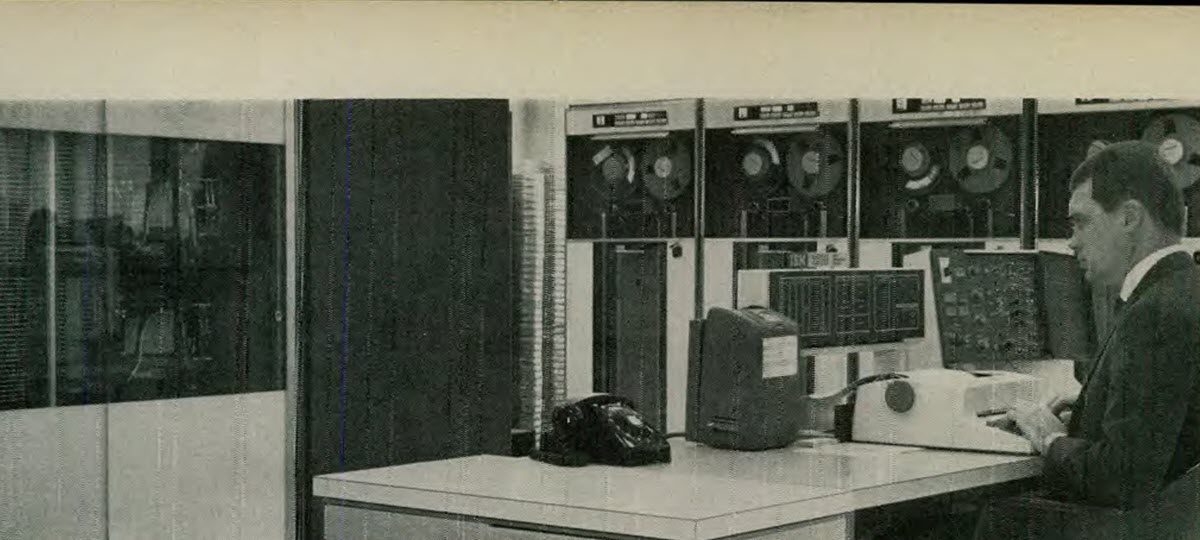
Computers of that era typically operated with a terminal/mainframe model. The mainframe contained the processing system and the storage media—by that point magnetic tape or disc. If you’ve seen a movie from the 1960s featuring “computers” as a backdrop with spinning tape reels on large wardrobe sized cabinets, then you get the gist of what one of these mainframe server rooms looked like. The terminals, manned by office clerks, were typically “dumb” interface devices with a keyboard and basic monitor that were linked to the mainframe either directly through wiring in the same building or over dedicated telephone lines.
The ARCO system was designed to provide basic information on heating oil accounts, where customer service “terminal” clerks handled the product/customer interactions and could change the delivery status of any account according to the latest wish of the customer (will call or will call automatic). To answer customer inquiries, they could also identify the number, name, address, desired delivery in gallons, whether the tank has full tank signal, “K” factor for winter and summer hot water hookup, record of last delivery showing gallons delivered, degree day of deliveries, next degree day of delivery and the financial side of the last deliveries such as price per gallon, extended price, truck making the delivery, etc. Generating a printout for this information was not required as it could be observed on a small terminal monitor.
Credit department clerks could change the credit status of the account in the same way that terminal clerks could switch delivery status, and in all cases receive instant visual feedback that the change has been made.
The benefits to computerization cited then are broadly the same as the benefits cited today. “[The system is not] primarily designed to replace employees,” said Robert Riggs, system and programming division manager. “But it is designed to let the people we do employ handle more business, do it faster, with greater accuracy and lower the unit cost to the company.”
Atlantic Richfield noted the equipment cost used to extract data from the disk file and to make changes (teleregister and teletypewriter) “rents for about $500 per month or about the cost of a good clerk, but it’s capable of doing several times more work.”
That’s not all. The system also helped Atlantic Richfield track its 16,500 employees. In this case, through a printout and not a screen. Stored on three reels of magnetic media were 80 bits of information on each of the company’s employees including birthday, education, job title, work history, benefits record, department and date of employment. If the company wants to fill a job that requires certain educational background, experience and a certain salary level, it feeds that request into the computer and the search of the tapes is on. Within a short time, a list of candidates meeting the prescribed condition is available.
 Keith Reid is the editor of Fuels Market News.